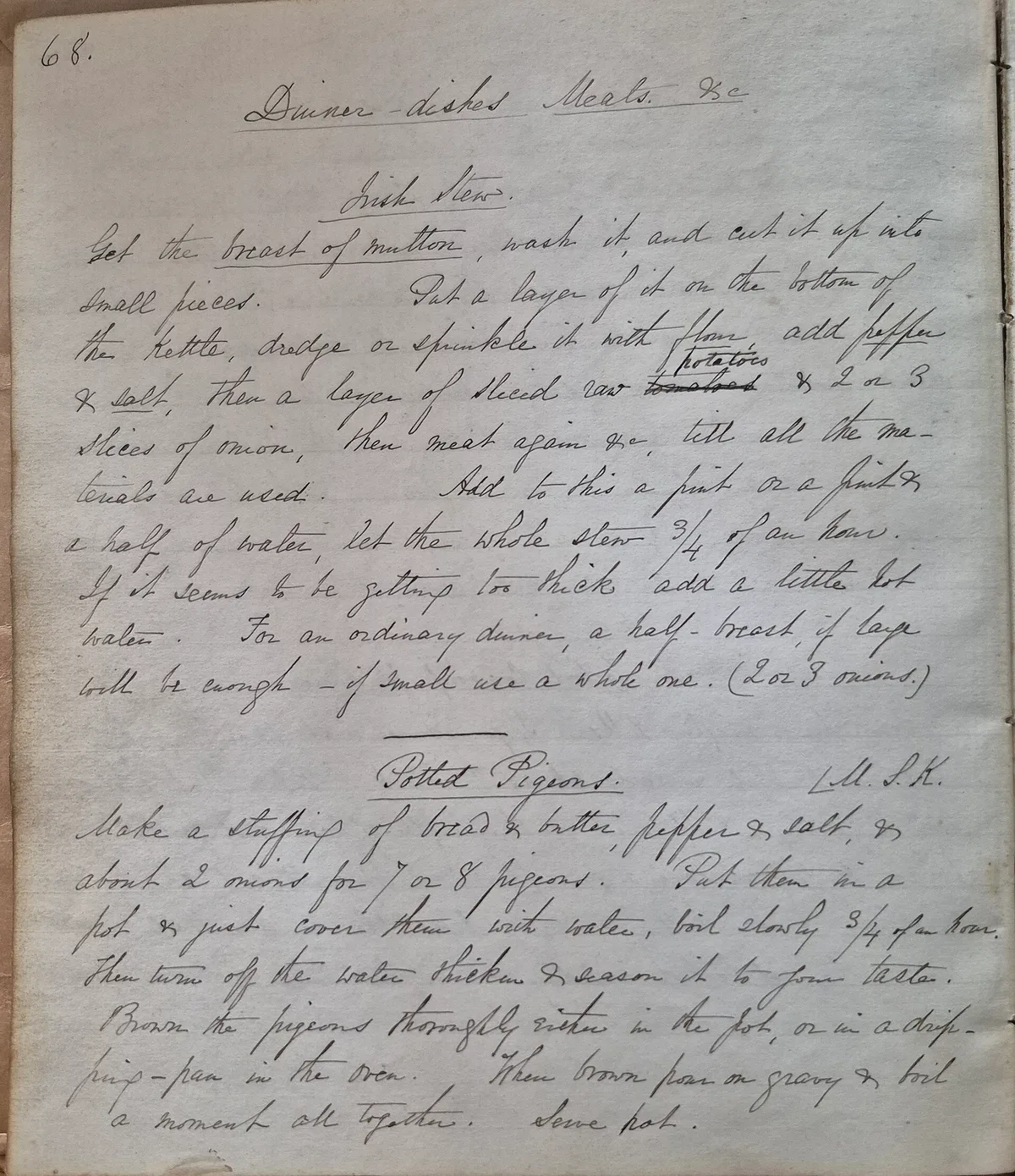
A family recipe is more than a set of instructions. It is a record of who cooked, who gathered, and what a household valued when the card was written. That is why a stained index card can outlast the china it sat beside.
The honest version of this story: the food itself is reproducible. Any competent cook can follow a printed recipe. What cannot be copied is the handwriting, the margin notes, and the name at the top. Those details are what turn a dish into an heirloom, and they are worth protecting on purpose.
This piece is information, not parenting or family advice. How your household records, stores, or passes down recipes is entirely your call. What follows is context and practical framing only.
What makes a recipe an heirloom rather than a document?
An heirloom carries provenance. It answers questions a printed page never does: whose hand wrote this, when, and for whom. A recipe card with a grandmother's name and a note like "double the vanilla" tells you about a person, not just a cake. That is the difference between information and inheritance.
The distinction between craft and art is older than the kitchen. As Wikipedia's overview of art notes, until the 17th century the word "art" referred to any skill or mastery and was not separated from crafts, and the older Latin sense translates roughly as "skill" or "craft". A well-made dish sits comfortably in that older meaning. Whether a recipe card rises to fine art hardly matters. It functions as a cultural object: it carries memory from one generation to the next, which is more than most framed prints manage.
Why does handwriting matter so much?
Handwriting is evidence of a person. It shows haste, care, age, and habit in ways a font cannot. A card annotated over decades records a life in the margins: substitutions during lean years, a child's name added when someone new joined the table.
There is also a practical argument. Handwritten cards survive technology changes. A recipe stored only in an app depends on a subscription, a password, and a company staying in business. Paper asks only that you keep it dry. Our analysis: treat the handwritten card as the master copy and any digital version as a backup, never the reverse.
A card also invites participation. Children can help transcribe a recipe, and the act of copying it by hand tends to make the details stick. That is a quiet form of learning, and it pairs naturally with other learning that happens at the kitchen counter rather than on a screen.
What actually gets lost when recipes go digital?
Three things, usually. First, the annotations. A scanned card flattens the layers of correction that show how a cook's thinking changed. Second, the context. Digital files rarely record who the recipe came from or when it was made. Third, the occasion. Recipes are tied to holidays, funerals, and ordinary Tuesdays, and a file named "cookies_final_v3" loses all of that.
None of this means digital tools are bad. Scanning protects against fire and flood. A shared document lets distant relatives contribute. The failure mode is not digitizing; it is digitizing and then discarding the original. Keep both.
How do you start a recipe heirloom in your own kitchen?
You can begin with what you already have. A simple process:
- Gather every recipe currently in circulation, from cards, clippings, and screenshots.
- Ask the oldest cooks in the family which dishes matter most, and why.
- Write down or record the stories attached to each dish while you can.
- Copy the chosen recipes by hand onto fresh cards, keeping the original wording, including the odd measurements.
- Store the originals somewhere dry and dark, and note where they live so the next person can find them.
Step four deserves emphasis. Keep the original phrasing. "A knob of butter" and "bake until it smells done" are part of the record. Converting them to grams makes the recipe more reliable and less true, and you can decide which you value. If your family enjoys this kind of project, it pairs well with How to Start a Family Tree Without Getting Overwhelmed, which tackles the same problem of recording family memory before it fades.
What about the disagreements?
Every family has one: the relative who insists the recipe was different, or that someone else's version is wrong. This is normal, and it is actually useful. The argument itself is evidence that the recipe matters. Write down both versions and label them. Your descendants will enjoy the dispute more than they would enjoy a resolved one.
Whether a recipe is "authentic" is often the wrong question. Recipes change every time they cross a kitchen. The heirloom is not a fixed formula; it is the chain of hands it passed through. A quiet sceptic's note: anyone selling you a "restored authentic family recipe" is selling you something they made up. The real one is in your drawer.
Practical steps for keeping the collection alive
A collection that lives in a box helps no one. A few habits that keep it in use:
- Cook from the cards. An heirloom that is never used becomes a relic.
- Add a new card each time someone cooks a dish worth keeping, with their name and the date.
- Let children choose one recipe to "own" and copy themselves.
- Use the cards as a reason to gather. A cooking afternoon works well alongside other screen-free weekend activities, and a family recipe night can anchor a regular screen-free family game night.
Recipes also give quiet children something to say. The dish itself starts the conversation, in the same way that a planned prompt helps conversation at the family table get past one-word answers.
What this means for your family
The evidence here is not statistical; it is material. The cards that survive are the ones that were written by hand, used often, and stored with care. The ones that vanish are the ones that lived only in one person's head or one app's servers. What the broader history of art and craft suggests, per the source above, is that skill passed between people has always been how culture moves. A recipe card is that idea in its smallest, most usable form.
Start with one card. Name the cook, keep the handwriting, and cook the dish. The rest of the collection will follow, and whether it becomes a family tradition is, as always, your call. We covered a connected angle in How to start a screen-free family game night that survives.