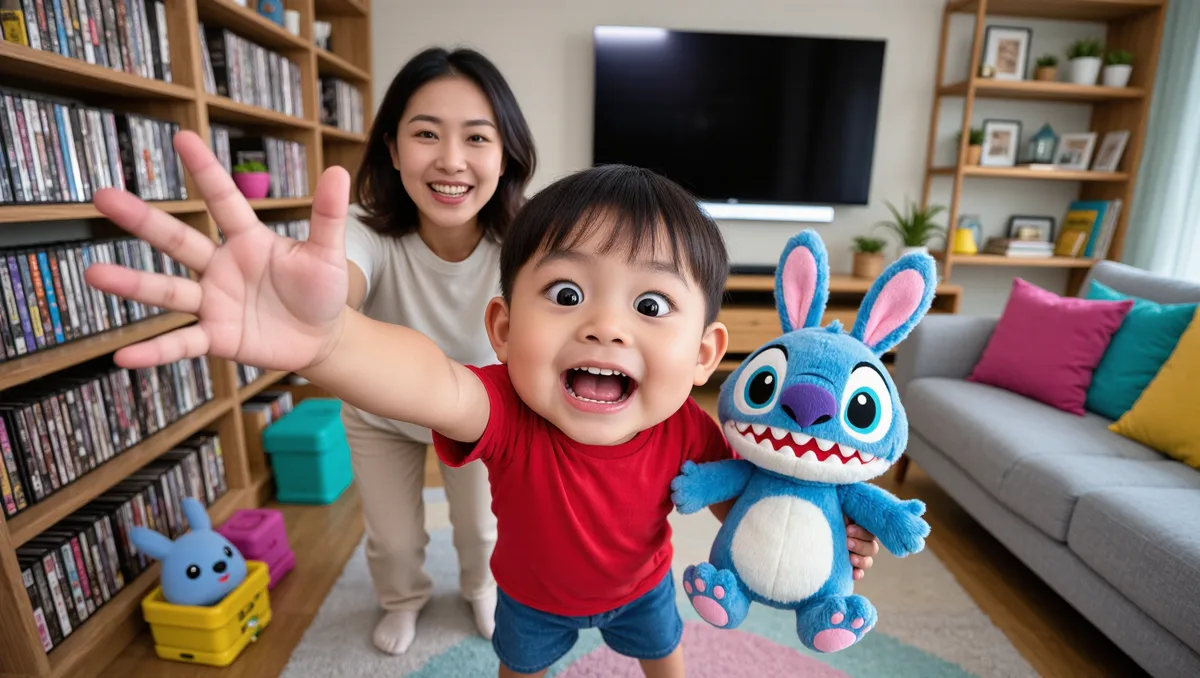
Family movie night runs on sequels now. Studios build their family lineups around franchises because a familiar title lowers the risk of an expensive release: parents already know the characters, kids already ask for them, and the marketing has a head start. The trade-off is real. Familiar films are easier to choose and easier to watch together, but the same bet, made over and over, narrows what gets made for young audiences in the first place.
This piece explains why the franchise model took over, what it gives a family, and what it quietly takes away. It is information, not advice; how your household handles the trade-off remains your call.
Why do studios keep betting on sequels?
Films aimed at families are expensive to make and expensive to market. An original story has to explain itself from zero. A sequel arrives with characters children already recognize, toys already on shelves, and a title parents already trust. That recognition is the product. The unknown part — whether the story holds up — is smaller, so the financial risk is smaller.
There is a second reason that has less to do with money. A franchise gives a studio a schedule. Once a series is established, the next installment can be planned years ahead, with merchandising, streaming windows and home releases arranged around it. An original film offers no such scaffolding. That is why the family shelf fills with chapters rather than one-offs, even when everyone involved knows some chapters will disappoint.
What does the familiarity actually do for a family?
The honest answer: quite a lot, on a Tuesday night. Choosing a film is a negotiation, and a known quantity shortens it. Siblings who argue over what to watch have at least one shared reference point. Younger children can handle a sequel they were prepared for more easily than a surprise. And co-watching is easier when the adults roughly know what is coming.
There is a deeper point here, and it is worth naming. The pull of a familiar story is not just laziness or marketing. Wikipedia's overview of the family notes that families ideally offer predictability, structure and safety as members mature — and a repeated ritual, same night, same couch, familiar characters, borrows exactly that logic. The franchise fits the ritual because it repeats. An original film asks the family to start over; a sequel lets the ritual simply continue.
What do audiences lose when studios play it safe?
The loss is on the supply side, and it is slow rather than dramatic. When most of the family budget goes to established series, fewer original films for young audiences get made, and the ones that do get made are squeezed into smaller releases. Children's viewing diets can narrow accordingly. A child who only ever meets characters that arrive pre-sold never has to take a chance on something new — and neither do the adults picking for them.
There is also a subtler cost. Franchises are built to be continued, so their endings are often soft. Stories that must leave room for the next chapter are structurally reluctant to resolve. That is not a flaw in every case, but it is a bias baked into the format, and it is worth noticing when a film ends on a shrug.
What this means for your movie night
Our analysis of the trade-off: the franchise model is good at the logistics of family viewing and weak at widening it. So the practical move is not to ban sequels — that fights the ritual instead of using it. It is to keep one slot in the rotation open for something nobody in the room has seen. If the pick flops, the ritual survives; if it lands, you have a new shared reference point that no marketing campaign sold you.
A few things make the open slot work. Let the children take turns choosing, so the unfamiliar pick is someone's ownership rather than an imposition. Keep the stakes low — a short runtime or a film you can pause helps. And treat the discussion afterwards as part of the night; talking about what everyone thought is where an original film earns its keep, and it is a habit worth building with any film. If you want structure for that conversation, our guide to how to talk about shows and games at the family table offers prompts that work for films too.
How do you balance the familiar and the new?
Think of it like a menu rather than a rule. The familiar titles carry the routine: they are the nights nobody has to negotiate. The new titles carry the growth: they are where children learn that an unknown film can be good, which is a small but real lesson in taking chances. A household that never leaves the franchise shelf loses the second thing. A household that only chases originals loses the ease that makes movie night sustainable in the first place.
Age matters here too. Younger children often need the comfort of repetition, and that is developmentally ordinary rather than a problem to fix. Older kids and teens are usually ready for more risk in the pick, and giving them the choosing role is an easy way to respect that. If sibling age gaps make shared picks hard, our piece on screen time rules for siblings of different ages covers the negotiation in more detail. Readers following this should also see Sibling screen time conflicts: negotiating fair rules when kids want different things.
The wider picture: franchises and family culture
It is worth stepping back. The word family has always stretched — Wikipedia's entry traces its use from households of blood and marriage to broader groups defined by care and shared life, and notes that researchers find people define it very differently. Franchise culture sits inside that stretch. The characters children grow up with become shared reference points across households, cousins' houses and playgrounds, which is part of why studios can sell the next chapter on recognition alone.
What the evidence does not settle is whether that shared vocabulary is net positive. It clearly connects people. It just as clearly comes from a system optimised for repeat business. Holding both thoughts at once is the honest position, and it is a useful one to model for older children who are old enough to notice that the film they love is also an advertisement for the film coming next summer.
Where family movie night goes from here
Nothing in the current incentives suggests studios will stop betting on sequels. The risk calculus that favors them has not changed, and the streaming era has arguably strengthened it, since a known title travels more easily across platforms and borders. What families control is the demand side. Every household that keeps a slot open for the unfamiliar casts a small vote for original work — not enough to change an industry, but enough to change a living room.
The verdict, in the spirit of an honest review: the franchise machine delivers comfort, reliability and easy logistics, and it charges for that in variety and in endings that resolve. Pay the price knowingly. Keep the ritual, keep one door open, and let the family decide each week which side of the trade it wants.