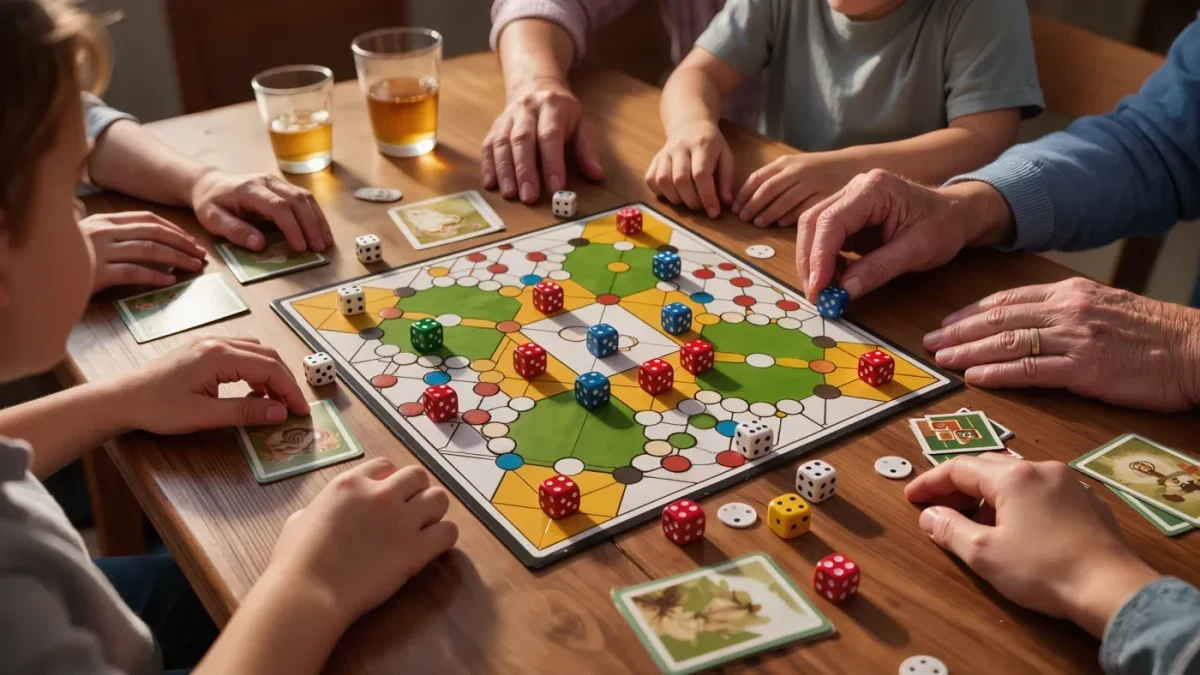
Start small, pick games the youngest player can win, and protect the ritual more than the rules. Families that sustain a weekly game night almost never begin with epic strategy games; they begin with twenty-minute games of luck and laughter. Research on family routines, including work summarized by the National Institutes of Health on shared family activities, links regular shared rituals to better communication and fewer behavioral problems in children. The mechanism is simple: a predictable hour where everyone's attention is in the same room.
Why do most game nights fail?
They fail for predictable reasons, and almost none of them are about the games. The most common is ambition: a two-hour game with a six-year-old collapses by minute forty. The second is scheduling drift, letting game night lose to homework, fatigue, and one parent's inbox. The third is the sore loser problem, which is real and developmental, not a character flaw. And the fourth is the sibling skill gap, where the oldest child wins everything and the youngest stops showing up.
Knowing the failure modes is the strategy. You are not designing an evening of entertainment. You are designing a habit that survives a tired Tuesday, and habits survive on low friction and short duration.
How often and for how long?
Weekly works better than daily, and forty-five to sixty minutes beats two hours, especially at the start. Anchor it to something already stable, Friday dessert, Sunday lunch, Saturday morning pancakes, so the new habit rides an old one.
Expect a rocky first month and budget for it. The first several sessions are less about playing and more about rehearsing the routine: where phones go, who picks the game, how losing sounds. Families that treat the awkward early weeks as setup rather than failure almost always break through by the fourth or fifth night, which is worth remembering on the night everything collapses by minute twenty. The backup quick game, something under fifteen minutes that everyone likes, rescues more traditions than any parenting strategy. Keep a backup quick game for the nights that implode early, and call the night a win anyway.
Put it on the family calendar like a dentist appointment you actually want, and let children take turns choosing the game so the night belongs to everyone in rotation rather than the loudest negotiator.Consistency matters more than duration in the first two months. A forty-five-minute night that happens twelve weeks in a row builds the expectation; one glorious three-hour session followed by three cancellations builds nothing. Once the ritual is established, children themselves become its enforcers, which is the point at which the habit is safe.
What games work for mixed ages?
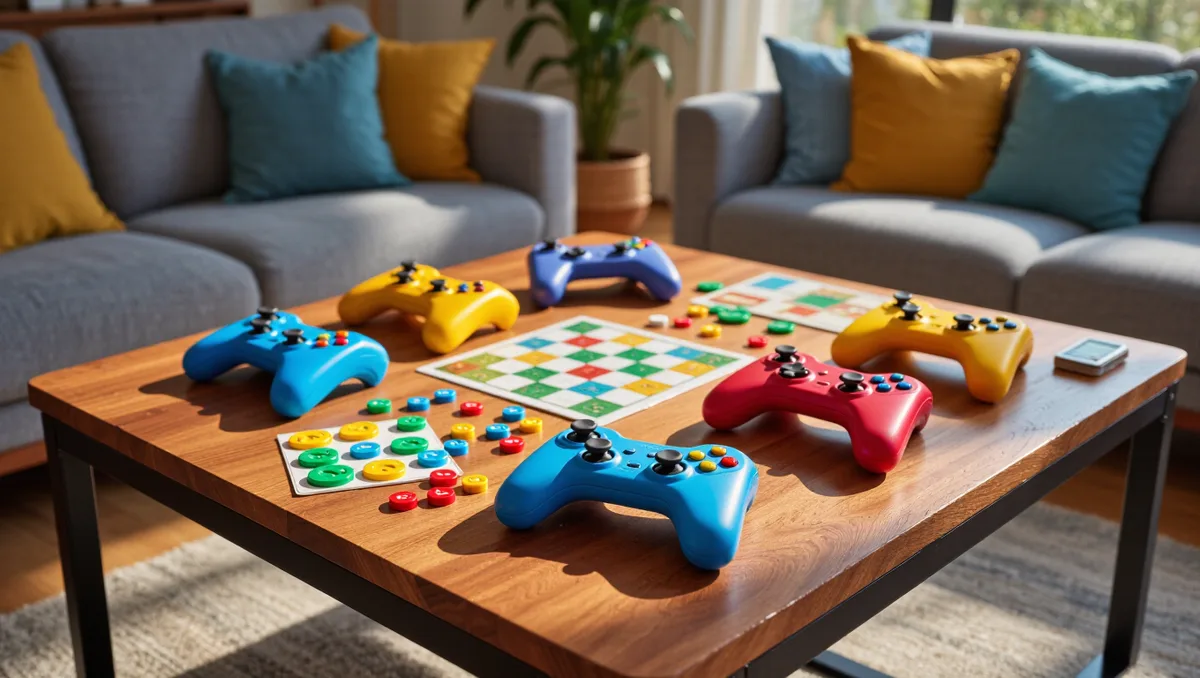
The best early purchases are games with enough luck that a five-year-old can beat a parent honestly. Save pure strategy for later. A starter ladder might look like:
| Stage | Game type | Why it works |
|---|---|---|
| Weeks 1 to 4 | Luck-heavy classics, cooperative games | Anyone can win; no one is eliminated |
| Months 2 to 3 | Simple card games, roll-and-move | Short rounds; losing is cheap |
| Later | Light strategy, team games in pairs | Older kids stretch; pair a big kid with a little one |
Cooperative games, where the family plays together against the game itself, deserve special mention for the first month. They remove the sore-loser problem entirely, and they quietly teach the older child to advise rather than crush. Team play does the same job later: the eight-year-old drafting with the four-year-old is the whole culture of game night in one gesture.
How do you handle cheating and losing?
Expect both, and respond with structure rather than lectures. For losing, build a tiny ritual around it: the winner clears the pieces, the loser picks the next game, everyone shakes on the result. Keep it light. Developmental researchers note that losing gracefully is a learned skill that develops across early and middle childhood; a six-year-old who cries over a lost round is on schedule, not in crisis. Praise specific recovery moments, "you handed over the dice without throwing them", rather than general sportsmanship speeches.
For cheating, the standard that works is quiet and firm: the round ends, no speeches, a reminder that a game only works if everyone agrees to the same reality. A child who cheats at seven is usually testing whether winning matters more to you than they do. The answer, delivered calmly and repeatedly, is no.
Does it have to be board games?
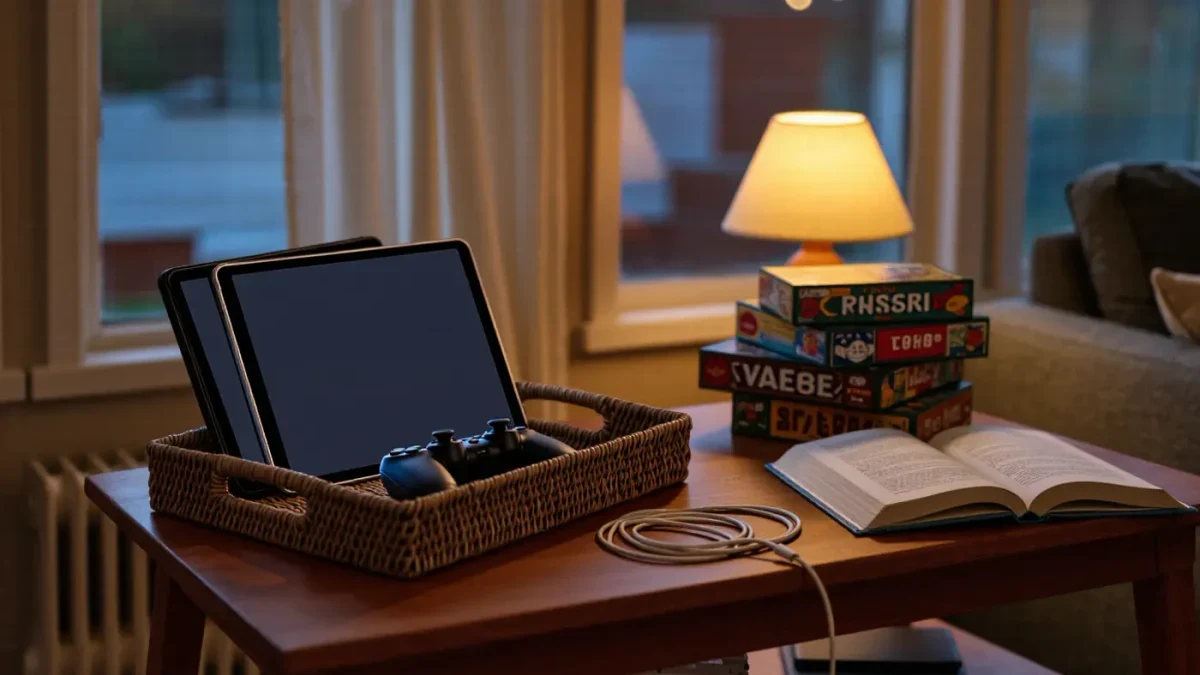
No. Cards, dominoes, dice, pen-and-paper games, charades, and twenty questions all count, and a deck of cards is the cheapest entertainment a family can own. The screen-free rule is the actual active ingredient, not the cardboard. The American Academy of Pediatrics has encouraged designated media-free times shared by the whole family, including parents, since its 2016 guidance, and game night is the most common way families make that concrete. Phones go in a basket, the parent's phone first, visibly, because children calibrate fairness by watching adults.
That said, keep the boundary clean rather than pious. If a rules question genuinely needs a lookup, one agreed lookup is fine; a fourteen-minute rules debate on YouTube is not, and the family judge, usually a parent, should just rule and move on.
How do you keep it going once the novelty fades?
Maintain rotation and occasion. Let the child whose turn it is to pick also arrange the snacks. Mark streaks casually, ten nights, twenty-five nights, with a small celebration. Invite a grandparent or a friend for special sessions, which raises the stakes pleasantly. Retire games that consistently produce conflict without sentimentality, and add one new game per season as an event.
And when a week collapses, resume rather than renegotiate. Skipping a week is data about the week, not about the tradition. Families differ, ages differ, and this is information, not family advice; the exact cadence is your family's call. But the pattern from households where it worked is consistent: short, lucky, weekly, and defended like any other appointment, until the children are the ones asking whether it is game night.