If your child's school suddenly requires phones to stay in lockers or pouches all day, it is not a one-off decision. Since 2024, a wave of state laws and district policies has restricted student phone use during the school day, and by the 2025–26 school year millions of American students were attending "bell-to-bell" phone-free schools. Here is what has actually changed, and what it means for your family. This is information, not legal or medical advice.
Which states have actually passed phone ban laws?
More than you might expect, and the list grew fast. Per Stateline (February 24, 2025), at least eight states — including California, Indiana, Louisiana, and Idaho — had enacted phone restriction laws by late 2024, with more states joining through 2025. The policies differ in scope: some bar phones only during class, while others require them to be put away from the first bell to the last, including lunch and passing periods.
What does 'bell-to-bell' actually mean?
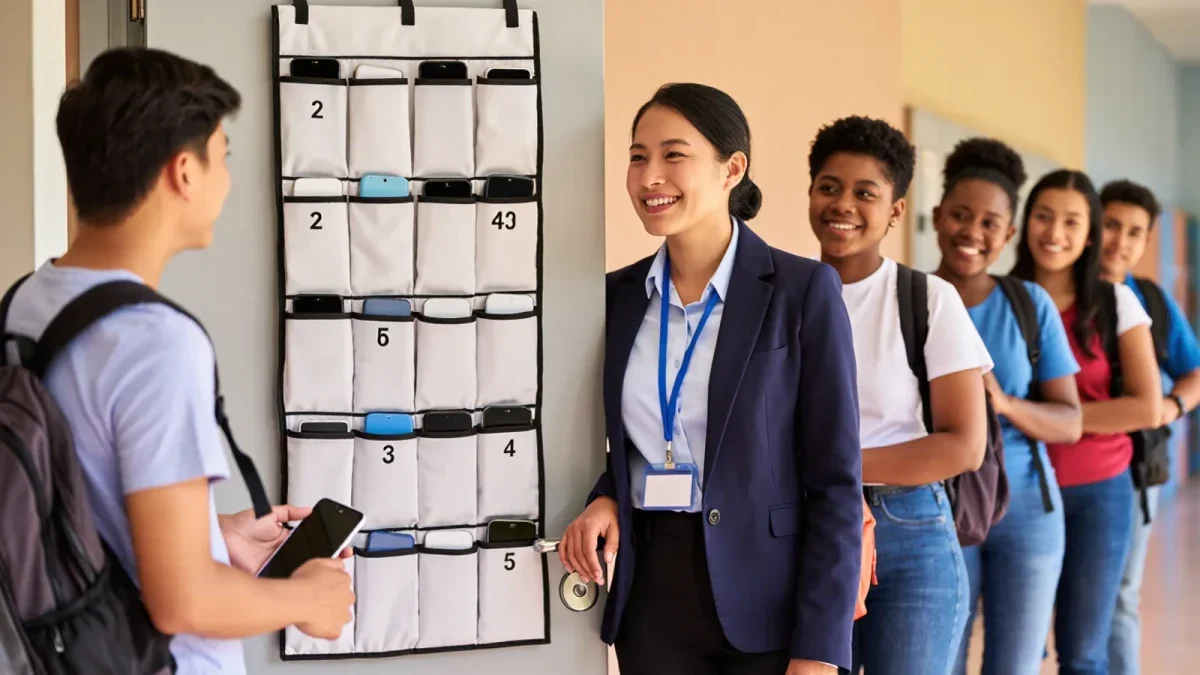
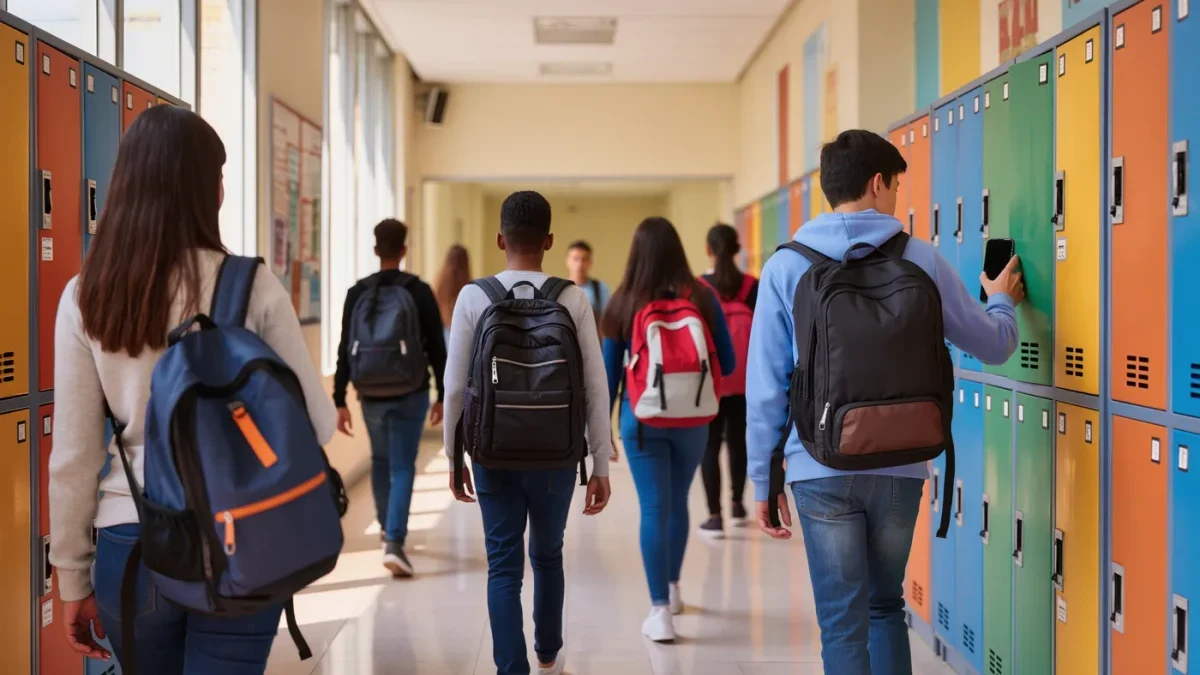
It means the phone is off limits for the entire school day, not just during lessons. Students typically store devices in lockers, locked pouches, or backpacks, and cannot use them at lunch, in hallways, or during study halls. New York's law, signed May 9, 2025, applies this standard statewide — per the Government Law Center at Albany Law School, it covers smartphones in kindergarten through 12th grade and took effect for the 2025–26 school year.
What is happening in California?
California took a district-by-district approach. The Phone-Free School Act, signed in September 2024, requires every school district, county office of education, and charter school to adopt a policy limiting smartphone use by July 1, 2026. That means the specifics — whether phones go in pouches, lockers, or backpacks — will vary by school. The Los Angeles Unified School District moved earlier, restricting phones during the full school day starting in 2025.
Why are schools doing this now?
The main reasons schools give are attention, social media pressure during the day, and cyberbullying that follows students into the building. Teachers' unions in several states backed the New York law, arguing that constant notifications make sustained teaching harder. Supporters also point to lunchroom conversations returning when screens go away. Critics, including some parents, worry about reaching their child during an emergency — which is why most laws carve out exemptions for medical needs, individualized education programs, and documented emergencies.
How can families find out their own school's rules?
Start with your district's website or student handbook, because state laws usually set the floor, not the details. Look for answers to three questions: when exactly must the phone be away, where is it stored, and what is the process if you need to reach your child mid-day. Most schools direct parents to call the front office, and offices report routing far more calls than they did before the policies.
What if you disagree with the policy?
You have options, and they are the same as for any school rule. Attend a school board meeting — California's law, for instance, requires districts to review their policies every two years, which creates natural openings for input. If your child has a medical device requirement, such as diabetes monitoring, ask about the exemption process in writing. Whether a phone ban is right for your school is ultimately your community's call; the laws only decide who writes the rules.
How do schools physically manage the phones?
Three models dominate. Locker storage is the cheapest but lets students return to lockers between classes, which some schools consider a loophole. Locked magnetic pouches, which students carry all day and unlock at exit stations, are popular in districts with strict bell-to-bell rules but cost money per student. A third group simply requires phones to stay silenced in backpacks, which relies on teacher enforcement and is the most common point of failure schools report.
What about real emergencies?
This is the concern parents raise most often, and it deserves a straight answer. Schools already have emergency protocols that predate smartphones, including lockdown procedures and reunification plans run through the front office. During an actual school emergency, administrators generally ask students not to use phones, because ringing devices can compromise lockdowns and flooded networks slow official communication. For family emergencies — a death, a sudden illness, a pickup change — calling the office remains the fastest documented route to your child.
What do students themselves say?
Reports from districts with established policies tend to be more mixed than the public debate suggests. Many teens describe boredom and annoyance in the first weeks, followed by adaptation: more face-to-face conversation at lunch, less anxiety about messages they cannot answer, and simpler social dynamics. Others, particularly students who relied on phones to manage anxiety or coordinate caregiving duties, describe the school day as harder. Both experiences are real, and neither is a reason to dismiss the other when you discuss the policy at home.
A note on younger kids
Elementary policies are usually simpler, because fewer young children carry smartphones at all. Where rules exist for K-5, they often allow phones in backpacks turned off, with use only at dismissal. If your elementary student walks home alone and carries a phone for safety, tell the school in writing and ask how dismissal-time use is handled — that is a common and usually easily solved edge case.
Quick checklist before the school year starts
- Check the district's current phone policy, not last year's version.
- Confirm the exact hours the rule covers — class time and bell-to-bell are different.
- Ask how exemptions work for medical devices or emergencies.
- Save the front office number in your own phone.
- Talk with your teen about expectations for after-school contact.
Policies are still settling, and enforcement varies widely between districts even within one state. Treat the first weeks of any new policy as a period to observe and ask questions rather than assume — and if something is not working for your child, that is exactly the kind of feedback school boards say they want.