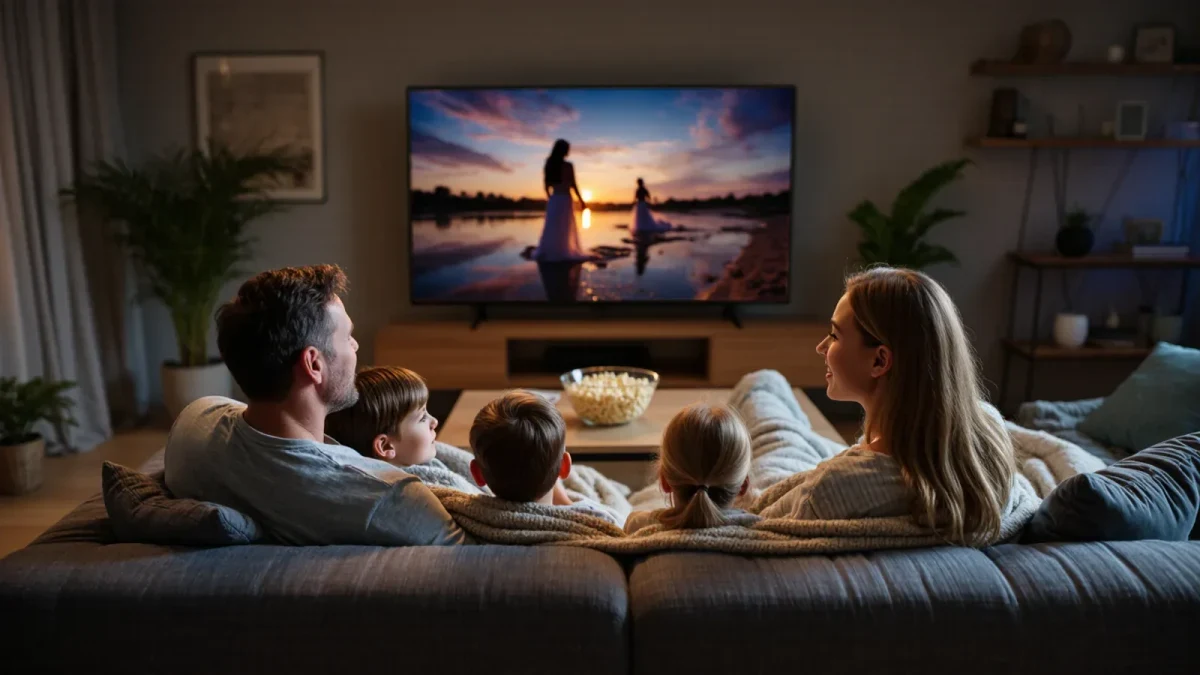
Nature documentaries are among the most reliable shared screens a family can pick: calm, factual, beautiful, and genuinely interesting across ages. Research on co-viewing consistently finds that children take more from screens when an adult watches and talks with them, and slow-paced natural-history footage suits that conversation better than anything with a plot to race through. One episode a week, same night, same snack — that is the entire mechanism. Here is how to build the ritual and what it quietly teaches.
Why does a weekly ritual work better than casual watching?
Predictability is the point. A fixed night — Friday documentary night, Sunday-before-bath wildlife — removes the negotiation that random screen time creates, because the plan is already decided. Rituals also build anticipation, and anticipation is what makes a 45-minute episode feel like an event rather than a default. Families who anchor the ritual to something physical — the same blanket, the same popcorn, a paper "ticket" for little kids — report it survives even vacation weeks. Keep the slot short: one episode, then off. The ritual is the viewing, not the binge.
What does co-viewing actually add?
The research direction is clear: children learn more from screens when an adult watches alongside and talks about the content, a finding long emphasized by children's media researchers. Conversation turns passive footage into active processing. You do not need to teach — narrate naturally. "Look how still it stays" teaches more than a quiz. Age matters: preschoolers need short segments and familiar animals; school-age children can follow hunts, seasons, and ecosystems; teens connect footage to climate news and conservation policy. One shared show, three different conversations.
What's the difference between slow and fast nature content?
Modern natural-history series are shot like thrillers — dramatic scores, chase sequences, cliffhangers before ad breaks. They are spectacular and fine to watch, but a steady diet of only high-stakes footage can turn every animal into an action sequence. Balance them with slower series: quiet observation, long takes, minimal score. Note the difference out loud with kids — "this one lets us just watch" — and they start noticing pacing as a media-literacy skill. Also worth naming: staged sequences, rescued-animal segments, and the editing tricks that create drama. Documentaries are made, not found, and children can handle that truth early.
What should we watch after the episode ends?
Give the ritual a small afterlife beyond the screen. Reliable follow-ups: each person names their favorite moment and one thing that surprised them; keep a family list of animals seen; one fact per episode goes onto the fridge. Younger children can draw the animal of the week; older ones can look up whether the species is threatened and where it lives. Fifteen minutes of this triples what sticks, and it costs nothing. Some families keep a "field journal" that becomes a year-end artifact. The habit being built is attention — noticing, recalling, and asking the next question.
How do we pick the first season?
Start with a series whose episodes stand alone, so a missed week breaks nothing, and pick the first episode around an animal your child already loves — sharks, big cats, penguins, or insects carry a young audience on reputation alone. Check the episode length against your ritual slot: forty-five minutes suits most school nights only if bedtime has margin, and shorter series exist for tighter schedules. Skim reviews for two things, narration style and intensity of the predation footage, since those vary more between series than picture quality does. National park and wildlife service websites also make good companions for follow-up facts, with species pages written for the public. Once the ritual holds, rotate deliberately: ocean one month, insects the next, a season-long series like one following a year in a single ecosystem after that.
What if my child only wants the same episode again?
Repetition is normal and even useful — children rewatch to master content, and the second viewing is where they notice the details the plot of the hunt hid the first time. Allow the favorite but keep the ritual varied by pairing: the beloved episode first, a new one second, then discuss both. Over weeks, the new material usually wins on novelty. If a child stays locked on one episode for months, that is information about what they love — follow the topic into books and museum visits rather than forcing variety for its own sake.
How do we handle hunting and death scenes?
Predation footage is the genre's signature and the main place to know your child. Young children can be genuinely upset by hunts; pre-screen or choose episodes about less dramatic behavior for the under-six crowd, and remember the narrator usually signals what is coming, so mute-and-skip is possible. For school-age children, treat death as part of the lesson rather than a problem — animals eat each other, and framing it plainly, without relish or euphemism, serves them better than avoidance. If a scene disturbs your child, talk about it that night rather than hoping it fades; documentary fear is usually about the unexpected.
Can this connect to the outdoors?
The strongest version of the ritual points outward. A documentary about pollinators lands differently the next time you see a bee at a flower, so plan the follow-up walk: the same park after the wetland episode, the backyard after the insect episode. City families get the most from urban-wildlife episodes, because the animals on screen live outside your door. The sequence — watch, talk, then go look — is how a screen habit becomes an outdoor habit. That is your family's version to design, and it can be as small as one Saturday walk a month with the episode still fresh.