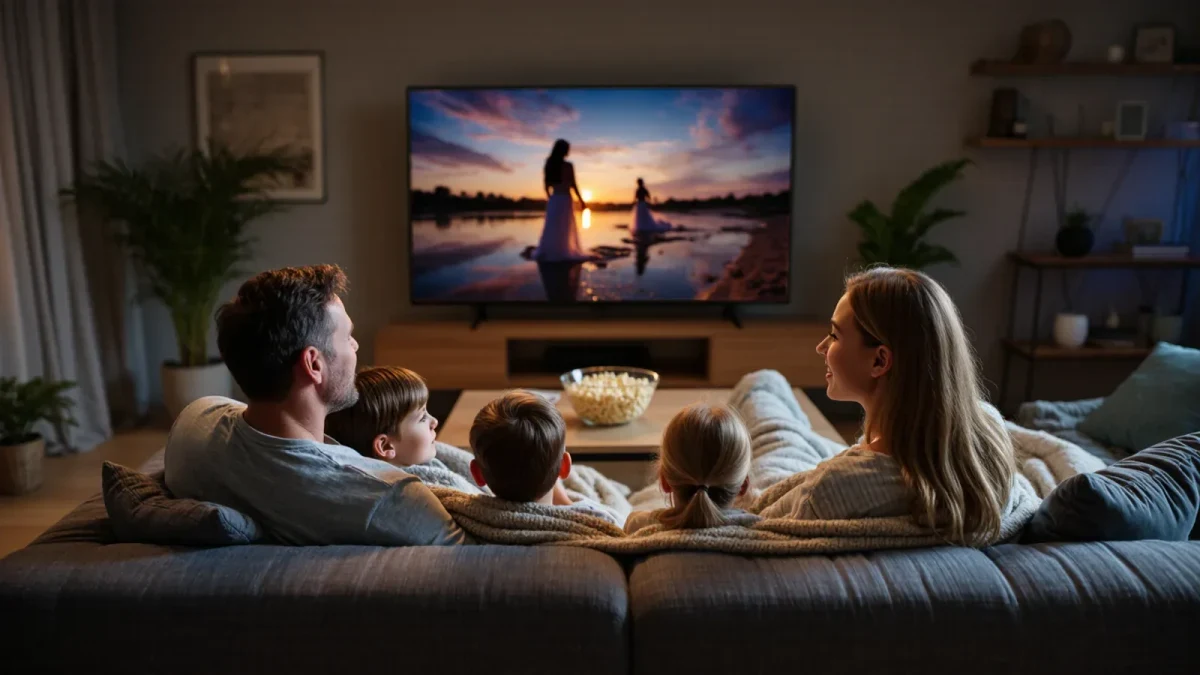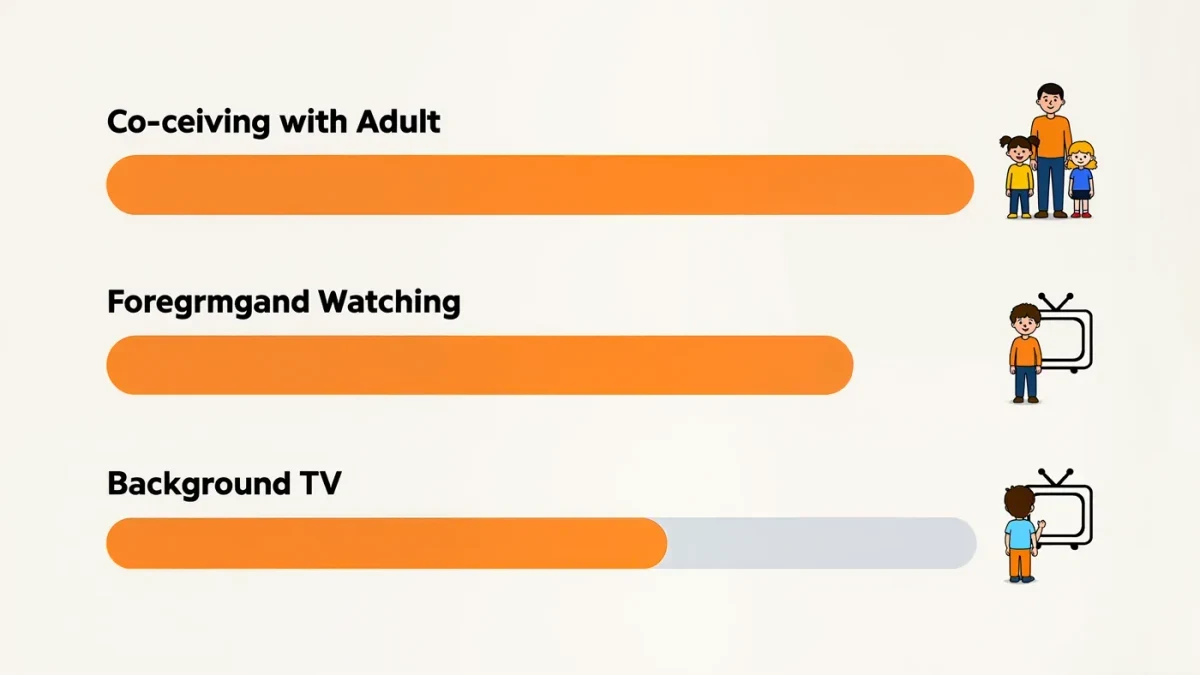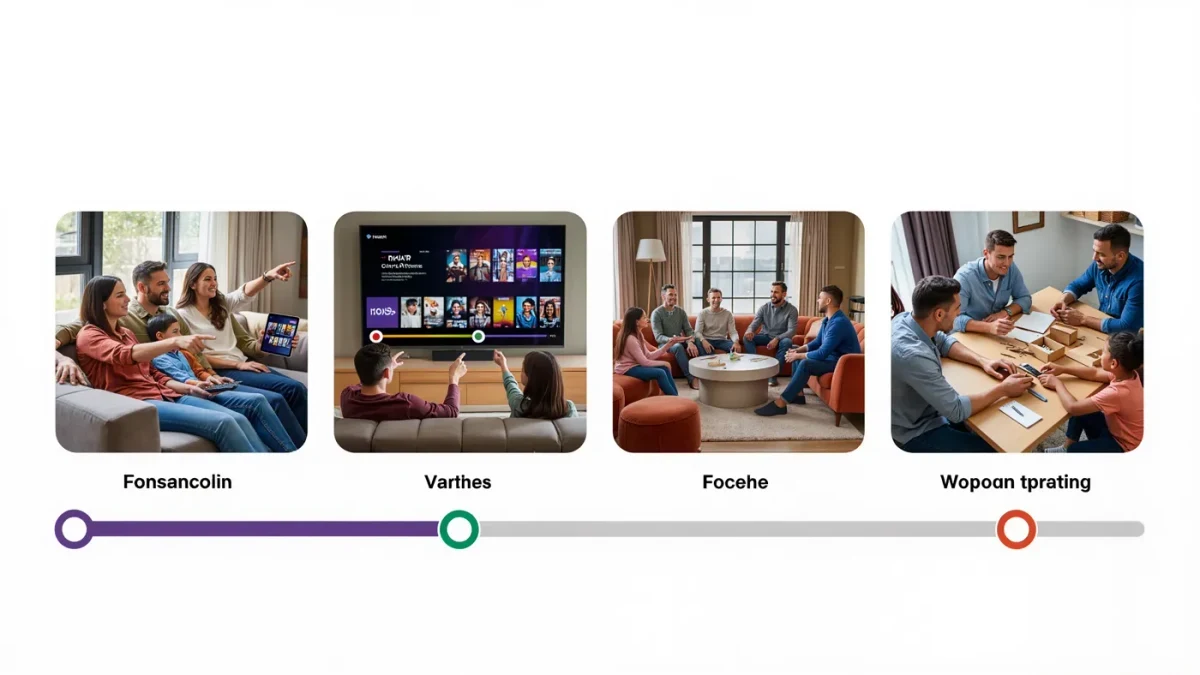
A family documentary night teaches best when it is built like a book club, not like a screening. Research on educational media, including long-running studies from the Joan Ganz Cooney Center at Sesame Workshop, consistently finds that children learn more from screen content when an adult watches and talks with them than from the content alone. The film is the prompt; the conversation is the lesson. Here's a practical structure for making one documentary a month stick. This is information, not advice.
Why documentaries work for families
Documentaries are one of the few screen formats that adults and children can genuinely enjoy at the same level, which matters for co-viewing. Nature and science documentaries in particular pair striking visuals with vocabulary children rarely meet elsewhere — migration, sediment, predator, orbit. Studies of co-viewing going back to Sesame Street research in the 1970s show that children take up new words and concepts faster when an adult labels and asks about what is on screen. The film supplies the material; your questions turn it into learning.
What's the basic format?
Keep it short, scheduled, and social. A workable rhythm looks like this.
- Pick the film together from a shortlist of two or three, a day or two ahead.
- Watch something under 45 minutes for children under 8, or a feature for older kids split across two nights if needed.
- Pause twice — once mid-film, once near the end — for one question each.
- Finish with ten minutes of talk and one follow-up chosen by the child: a book, a walk, a map, or a drawing.
The pause is the whole trick. Stopping the film signals that ideas are worth interrupting for, and it gives younger children a chance to ask what a word means before the plot moves on.
How do you pick a documentary by age?
Match runtime and subject to the child, not to reviews. A rough guide:
| Age | Length | Reliable genres |
|---|---|---|
| 4–6 | 20–30 min episodes | Nature shorts, animal behavior, gentle seasons-and-weather films |
| 7–9 | 40–60 min | Wildlife features, space, volcanoes, dinosaur paleontology |
| 10–12 | 60–90 min | Expedition, engineering, history with reenactments, sports stories |
| 13+ | Features and series | Current affairs with caution, biography, environment, technology |
For teens, documentaries about real events can overlap with genuinely upsetting news topics. A trailer watch together before committing saves the night.
What questions actually work?
Three kinds carry most of the value. Prediction questions — "What do you think happens next?" — keep attention active. Perspective questions — "What would you do in that situation?" or "Who do you think is right here?" — build the interpretation skills media literacy researchers care about most. And fact-checking questions — "How could we find out if that's true?" — plant the seed of source thinking, which pays off for years. One question per pause is plenty; an interrogation kills the evening.
What about follow-ups after the credits?
The best follow-up is the one the child picks, and it should take under an hour. A library book on meerkats after a desert film. A moon chart on the fridge after a space film. A family map with pushpins after a migration film. The Joan Ganz Cooney Center's work on transmedia learning found children engage most when a story extends across formats they can touch and revisit. The follow-up is also where the documentary becomes yours rather than something you consumed together.
How often should you do it?
Monthly beats weekly. A monthly cadence keeps the night special, gives time for follow-ups to actually happen, and survives busy seasons. Weekly schedules tend to collapse by the fourth week, and a collapsed ritual teaches kids that family plans are negotiable. Mark it on a shared calendar, let children rotate the film pick, and protect the start time the way you would protect a dentist appointment — reliably is the entire brand of the ritual.
What if the documentary scares or bores your child?
Both are fixable. For fear, nature documentaries with predator scenes can be intense for children under 7; previews on a parent's account are worth the ten minutes, and skipping to the next episode is a legitimate move. For boredom, the culprit is usually runtime, not topic — switch to a shorter episode of the same series. Whether a particular subject suits your particular child is your call; you know what they can carry.
The short version
One film a month, short enough to finish, chosen by the kids, paused twice, talked about for ten minutes, and extended with one small follow-up. The research on co-viewing says the talking is where the learning lives — the documentary just gives you something worth talking about.