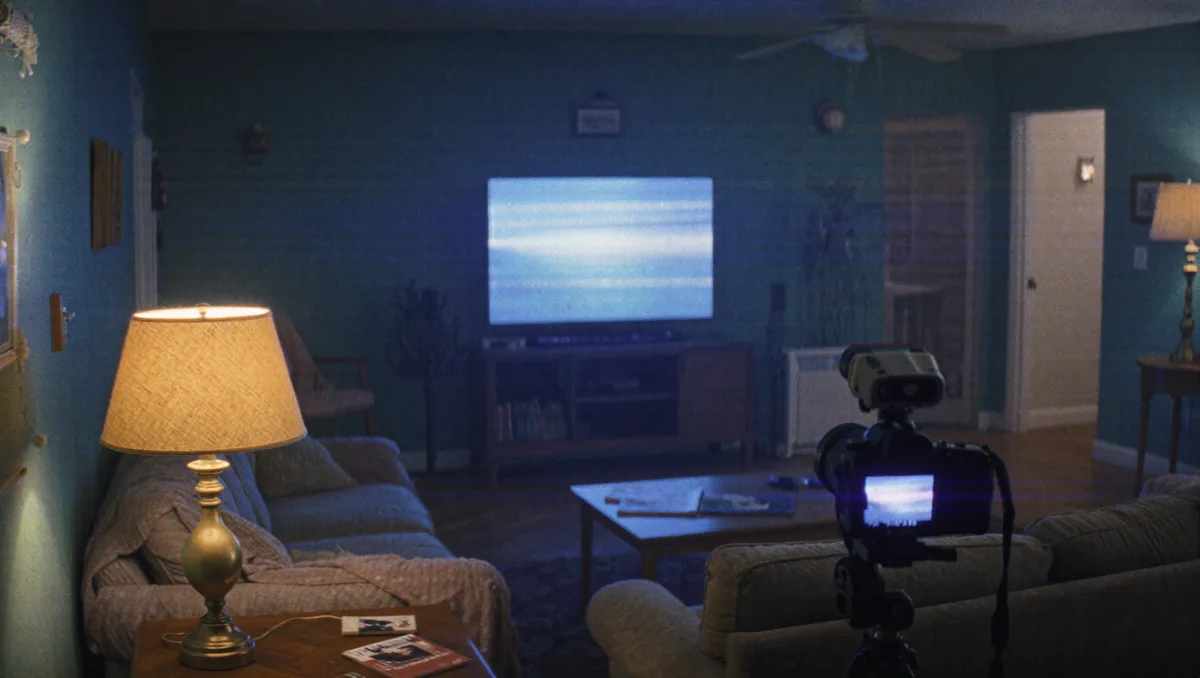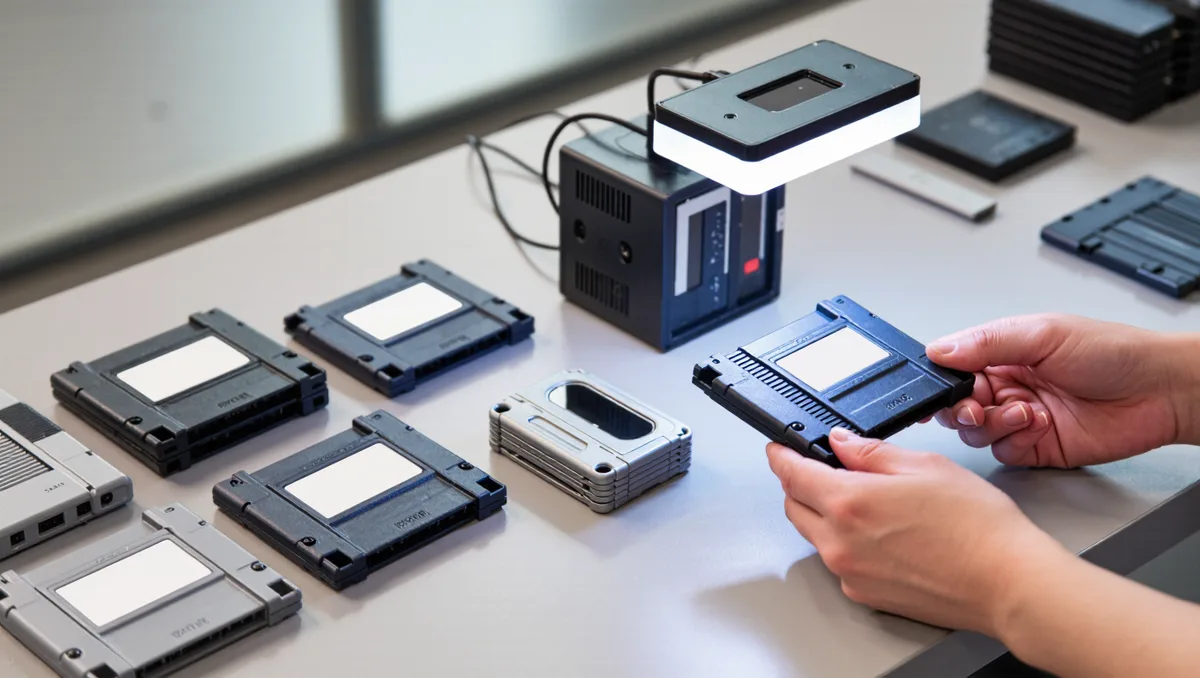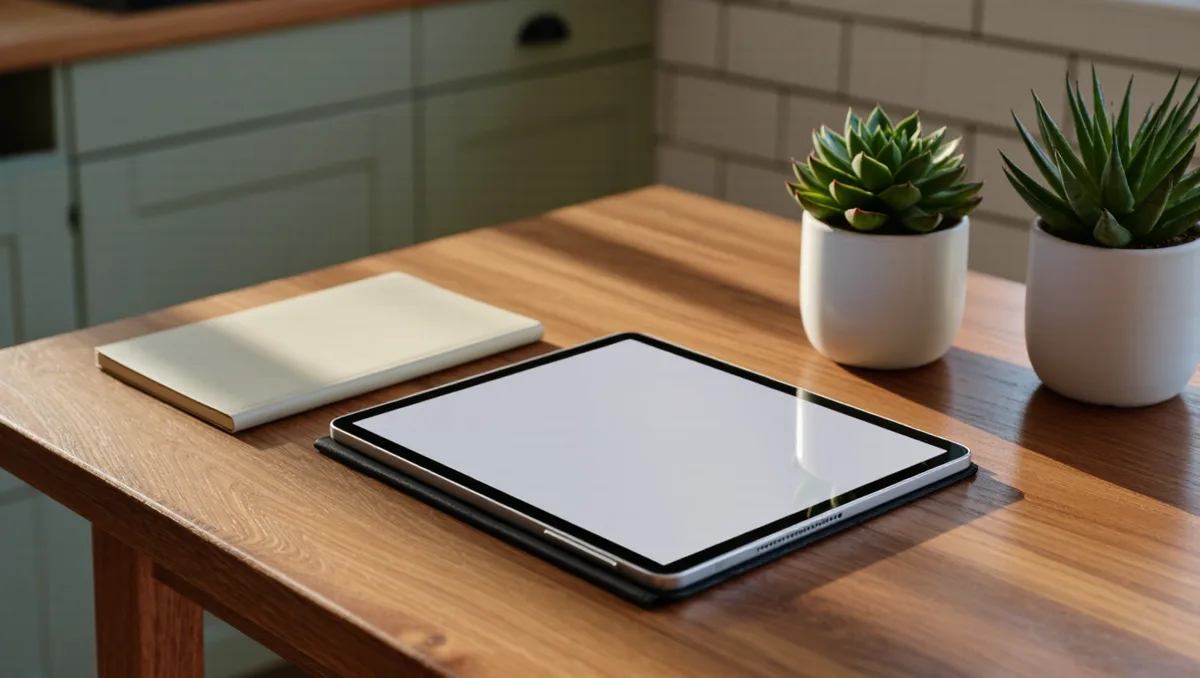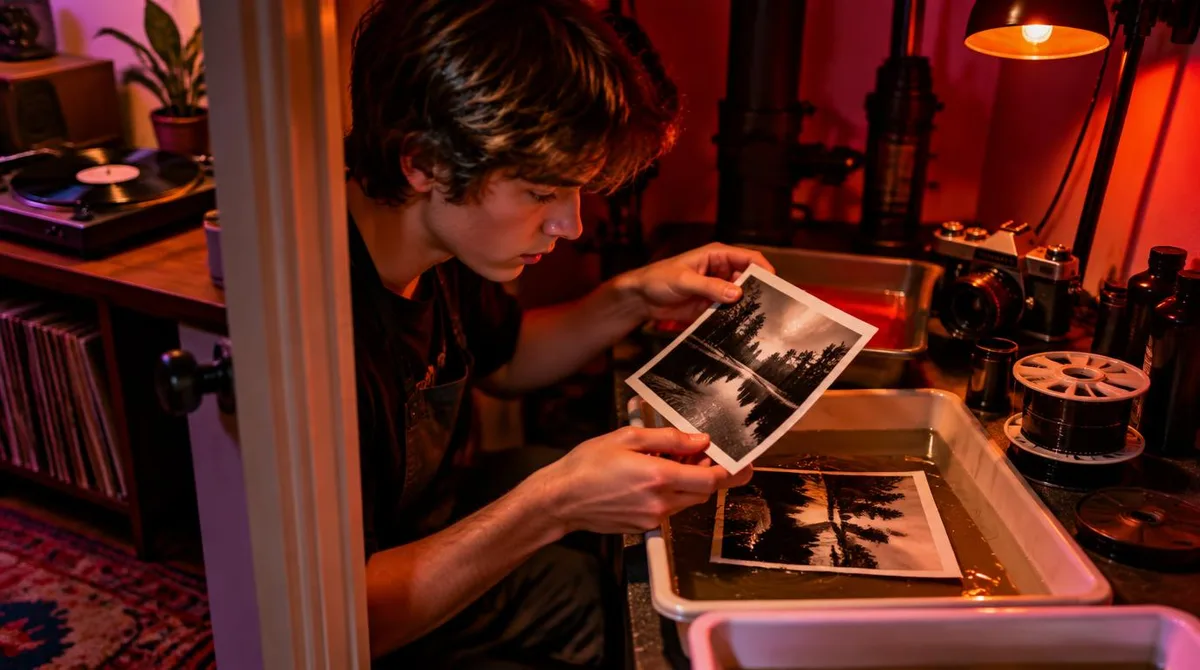
Analog hobbies are pastimes that work without a screen: film photography, vinyl records, board games, knitting, journaling, gardening with paper seed catalogs. The shift toward them is easy to spot at a kitchen table. A teenager develops photos in a closet. A parent plays a record instead of opening a playlist.
The honest version of why is simple. Screens are where work, school, and social life already live, so a hobby that lives there too stops feeling like a break. An analog hobby draws a clear line: this hour belongs to your hands, not your notifications. That line is the whole appeal, and it is also why the trend fits families looking for balance rather than a total retreat from technology.
This article is information, not parenting or psychological advice. Whether an analog hobby helps your household depends on your child's age, your schedule, and what everyone already enjoys. That call stays with your family.
What counts as an analog hobby, exactly?
An analog hobby is any activity whose main tools are physical and whose main output is something you can hold. Think printed photographs, a stitched hem, a finished puzzle, a loaf of bread. The defining feature is not that no technology is involved. A film camera is technology. The feature is that the technology does one job and then gets out of the way.
It helps to place the trend in context. According to Helpful Professor, a lifestyle is a way of life made up of habits, rituals, and daily behaviors, and many people now choose alternative lifestyles that depart from mainstream defaults. The same overview describes slow living as an intentional, unhurried approach to everyday life that favors quality over quantity. Analog hobbies sit naturally inside that frame: they are a habit-level choice, not a wholesale rejection of modern life.
The range is wider than the stereotype. Some analog hobbies are quiet and solo, like drawing or letter writing. Others are social, like board game nights or community sports played without an app. The shared trait is friction you can feel: loading film, tuning a string, waiting for dough to rise. That friction is slower than a swipe, and slower is the point.
Why are screens pushing people toward offline pastimes?
The simplest explanation is saturation. When a phone delivers messages, entertainment, and homework in one device, leisure stops feeling separate from obligation. A hobby on the same screen competes with every open tab in your head. An offline hobby has no tabs.
There is also a completion effect. Analog hobbies produce finished things: a developed roll, a finished scarf, a completed model. Digital leisure often produces nothing you can point to, which can leave the hour feeling spent rather than used. Making something physical gives the time a shape.
For parents, there is a modeling angle. Children read adult habits before they read any rule about screens, which is the premise behind our piece on modeling healthy phone habits. A parent knitting at the table or sorting prints at the counter demonstrates, without a lecture, that an evening can be screen-free and still full. Whether that demonstration lands is, as always, partly up to the child. We covered a connected angle in Everyday lifestyle habits of highly creative people, and what they actually share.
What does the evidence actually say about offline time?
Here the honest answer is: less than the trend pieces imply. The case for analog hobbies rests mostly on what they replace, not on studies proving film photography builds character. Broad claims that screen-free hobbies cause better sleep, grades, or moods outrun the evidence. What is well established is narrower: sleep researchers generally advise keeping bedrooms free of screens and bright displays before bed, an approach we cover in our screen-free bedroom setup guide. Readers following this should also see A screen-free bedroom setup that helps sleep.
What experts in child development tend to recommend is balance and intention rather than prohibition: some screen-free time, chosen rather than imposed, with activities a child actually likes. Whether an analog hobby fills that slot in your home is your family's call, and a child who hates knitting will not be rescued by knitting.
One useful test: does the hobby hold attention without a score, a streak, or a notification? If yes, it is doing the job analog hobbies are chosen for.
How can a family start an analog hobby without overspending?
Start with what is already in the house. Paper, pencils, a deck of cards, a board game, and a library card cover the first month of most analog hobbies. The expensive version, new cameras and turntables, is optional and often premature.
A practical sequence:
- Pick one hour a week and protect it. Same slot each week beats good intentions.
- Let each family member choose their own activity. Shared enthusiasm is not required; shared time is.
- Set a small budget cap before buying anything. Secondhand gear is usually enough to learn on.
- Expect a clumsy first few sessions. Analog skills reward repetition, not talent.
- Keep phones in another room during the hour, adults included.
If a full weekend reset sounds useful, our guide to a family digital detox weekend walks through a longer version of the same idea. A single hour is the better starting point for most households.
Do analog hobbies and screens have to compete?
No, and treating them as enemies misses the useful middle. Many analog hobbies pair naturally with digital tools: a phone can identify a plant, teach a chord, or find a local chess club. The pattern that works is analog first, screen as reference. The hobby leads; the device assists.
Photography is the clearest example. A child can learn framing and light on any phone camera before anyone buys film, which is the approach in our guide to photography as a kid's hobby. If the interest sticks, a secondhand film camera becomes a considered purchase rather than an impulse.
There is also overlap with decluttering. A household clearing out unused stuff, as in our room-by-room decluttering guide, often finds the analog hobby hiding in a drawer: the unused guitar, the neglected sketchbook. Starting a hobby can cost nothing more than attention.
What this means for your family
The shift toward analog hobbies is best read as a correction, not a conversion. People are not abandoning screens; they are carving out hours where screens do not follow. For families, the practical takeaway is small and repeatable: one protected offline hour, one activity each person chose, one modest budget. The evidence supports the intention more than any specific hobby, and the rest, which hobby, how often, how strictly, remains your family's call.