Plan the replacement, not just the absence. Screen-free weekend time works when it is social, has a loose structure, and offers something the screen does not, usually novelty, physical movement, or an adult's full attention. Time-use research, including federal surveys of American children's activity patterns, keeps finding the same gap: children's outdoor and unstructured time has fallen for decades while screen time rose. The fix is not willpower on Saturday morning; it is a short list of reliable activities decided on Thursday.
Why do screen-free weekends fail?
Because they are framed as subtraction. Announcing "no screens this weekend" removes the default activity and replaces it with nothing, and a bored child in an unstructured house will negotiate, whine, or find a device with the persistence of water finding a crack. The screen's real competitors are few, and they all share one trait: they are planned by an adult in advance.
The second failure mode is parental presence with divided attention. A parent scrolling through a museum or a hike teaches the exact lesson it intends to cancel. Screen-free time that includes the adults' phones in a drawer is two to three times more pleasant for everyone, though no official agency has measured pleasantness; the American Academy of Pediatrics has simply recommended designated media-free time for the whole family since 2016.
What works at home, without much setup?
The reliable home category is making, in the broadest sense: cooking a new recipe together, building something from cardboard, drawing a family comic, running a lemonade stand, reorganizing a bedroom into a fort city. The common structure is a project with a visible end product and a role for the smallest participant. A few tested staples:
- Cooking projects where the child does real work with a real result, preferably something with dough
- Building challenges, a bridge across two chairs, the tallest tower, a marble run from recycling
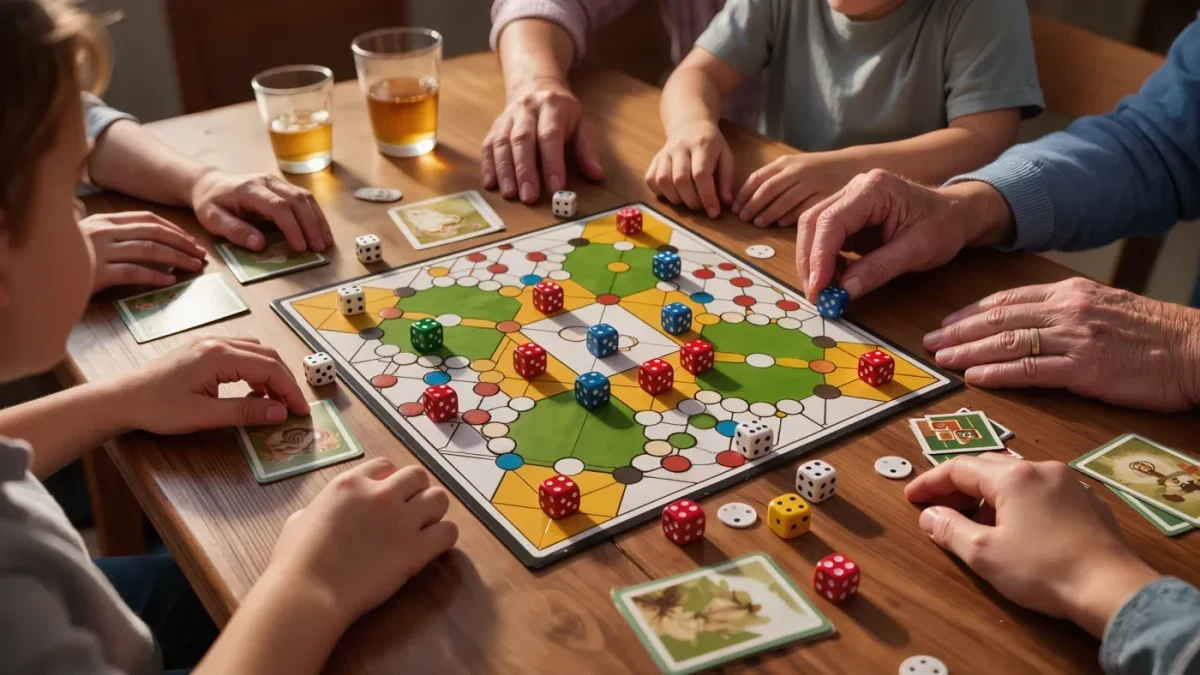
- Family tournaments, cards, dominoes, mini golf in the hallway, scored and taken seriously
- Audio afternoons, a long audiobook with drawing supplies, which counts as rest without a screen
- Science kitchen tricks, vinegar and baking soda, cabbage indicator, magnets from the junk drawer
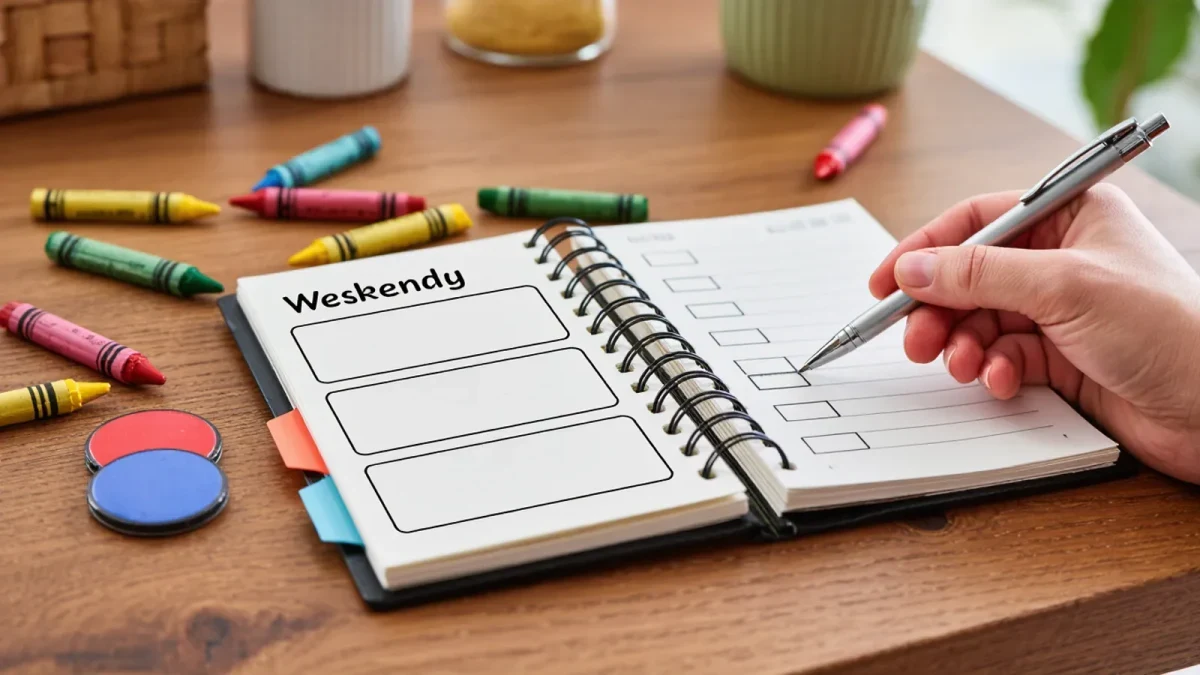
Keep a running list on the fridge of things the family liked. The list is the actual asset: on a low-energy Sunday, choosing from a proven menu beats inventing an activity under pressure.
What works outside the house?
Anything with a destination, a clear endpoint, and preferably water.
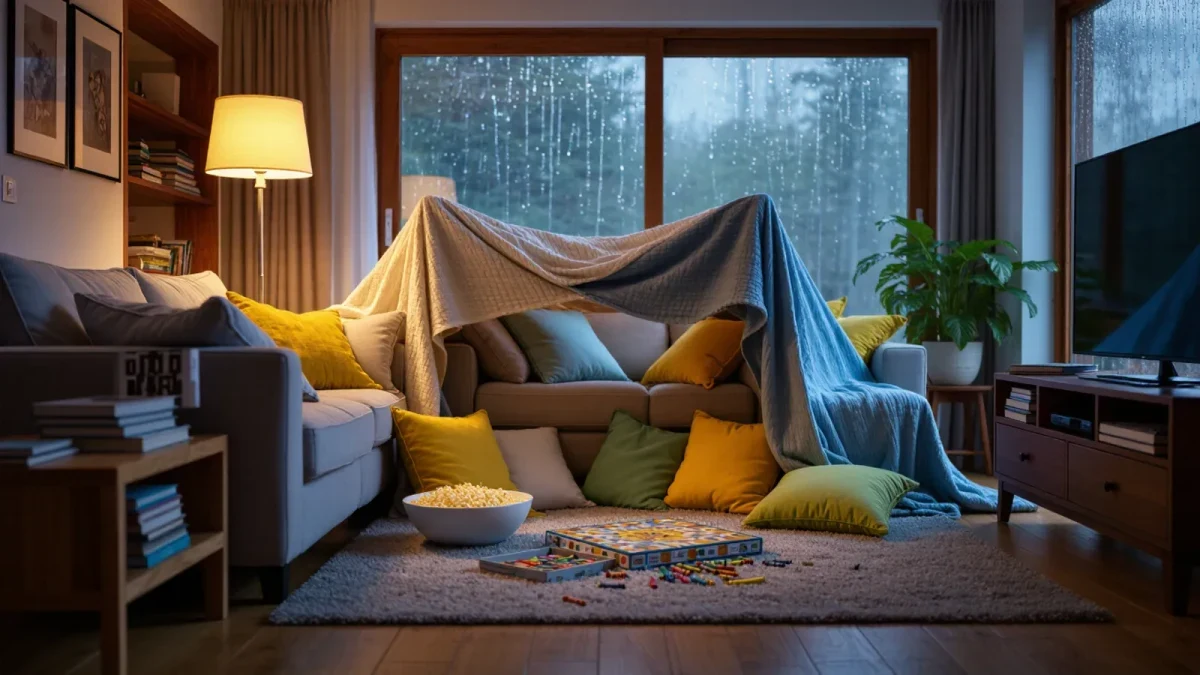
Weather kills more screen-free weekends than motivation does, so keep three indoor anchors ready: a pantry cooking project, a building challenge from the recycling bin, and one out-of-the-house escape like the library or an indoor pool. The family with a rain plan does not lose the Saturday to the first thunderstorm, and the fridge list works best when it is sorted into sunny-day and rainy-day columns. Invite the children to add to the list after each weekend, since a suggestion they contributed is one they will defend. A list the children built together is also the cheapest possible answer to the Sunday-morning question of what to do.
Libraries, farmers markets, bike trails, swimming, tidal pools, forest walks with a mission, count birds, find five different leaves, photograph nothing because the phone stays home. The mission matters more than the venue: children who have a task, even a silly one, sustain attention dramatically longer than children told to enjoy nature.Federal health guidance, including the Physical Activity Guidelines for Americans maintained by the Department of Health and Human Services, recommends school-age children get an hour of daily physical activity, and a screen-free weekend naturally fills much of that budget. Local institutions do the rest: public libraries lend more than books, running free weekend programs for children, and community recreation centers schedule open swim and gym hours that cost a few dollars per family.
How do you handle the boredom protest?
Expect it, and do not rescue immediately. Pediatric guidance generally treats boredom as a developmental feature, the on-ramp to self-directed play, not a problem to be solved by an adult within ninety seconds. The workable sequence: acknowledge, offer two options from the fridge list, and hold the line. Most children cycle through protest into play within fifteen to twenty minutes, a timeline most parents learn by watching it happen twice.
Structure the day loosely so there is less empty time to fight about: one outing in the morning, one making project in the afternoon, and a genuinely lazy stretch in between. The lazy stretch is not a failure of planning; it is where children practice entertaining themselves, which is the actual long-term goal of every screen-free weekend.
Should the whole weekend be screen-free?
Not necessarily, and absolutism often backfires. Many families run one full screen-free day, usually Saturday, and keep Sunday loose with an agreed evening film, which preserves the ritual without making the entire weekend a standoff. Teenagers may need a different contract entirely, trading screen-free family blocks for autonomy elsewhere, negotiated rather than imposed.
The consistent element across ages is the adults' participation. A screen-free Saturday that ends with the parents scrolling after bedtime teaches that the ritual was theater. Children are watching what the adults do with their own free time, and the cheapest persuasive technology a family owns is a parent visibly enjoying a walk, a book, or a badly built cardboard castle.
How do you keep it going?
Repeat, rotate, and lower the bar. A screen-free Saturday that happens most weeks beats an ambitious monthly festival that dies by August. Let children rotate as the planner, keep the fridge list growing, and let failures go without ceremony: a day that collapses into movies and popcorn still counts as a day the family spent together. Every family's mix is different, and this is information, not parenting advice; the exact shape of your weekends is your family's call. The finding underneath all of it is modest and encouraging: children rarely miss the screens they were sure they could not live without, provided something else is on the table.