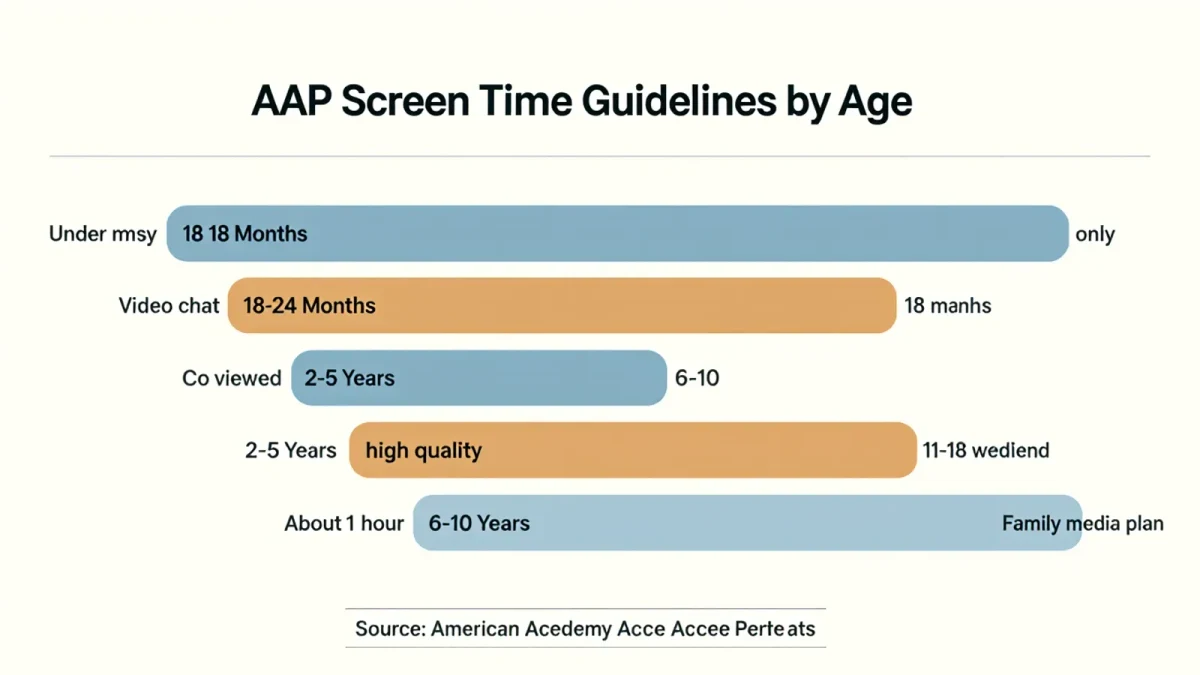
Educational television for preschoolers has one of the strongest evidence bases in all of children's media, and the findings are unusually consistent: well-designed shows measurably teach, context shapes the size of the effect, and background TV teaches nothing. A landmark 2001 economic analysis found Sesame Street's early seasons produced lasting academic gains for children who watched as preschoolers. Meanwhile the American Academy of Pediatrics recommends limiting screen exposure for ages 2 to 5 to about one hour of quality programming daily — quality being the operative word. This is information, not advice.
What did the Sesame Street research find?
The findings span five decades. Early field studies in the 1970s found preschool viewers showed gains in letter and number recognition, and later long-range studies followed children into adolescence, associating preschool viewing with better school readiness. The 2001 analysis by economists Phillip Levine and Melissa Kearney, later extended in 2015, found the show's arrival improved school performance notably for children in lower-income households — television as an equalizer, an effect moderates with age but was substantial at first-school exposure. This body of work is why researchers say content design, not the medium, is the active ingredient.
What makes a show genuinely educational?
The research points to a recognizable recipe, and it's worth knowing before choosing what to stream.
| Design feature | Why it works |
|---|---|
| Clear curriculum with one goal per segment | Preschoolers encode one message at a time |
| Repetition of key words and routines | Spaced repetition builds vocabulary |
| Direct address and pauses for the child to answer | Creates participation, which boosts engagement |
| Narrative over fast cuts and constant motion | Slow pacing aids comprehension |
| Labeling objects and actions explicitly | Word-to-meaning mapping, the core of language learning |
Shows built on this recipe — by public-media producers with in-house curriculum teams — consistently outperform generic entertainment content in comprehension and vocabulary measures. Producers' own research operations publish these design standards, which is why public-television preschool shows dominate the positive-effects literature.
What's the difference between foreground and background TV?
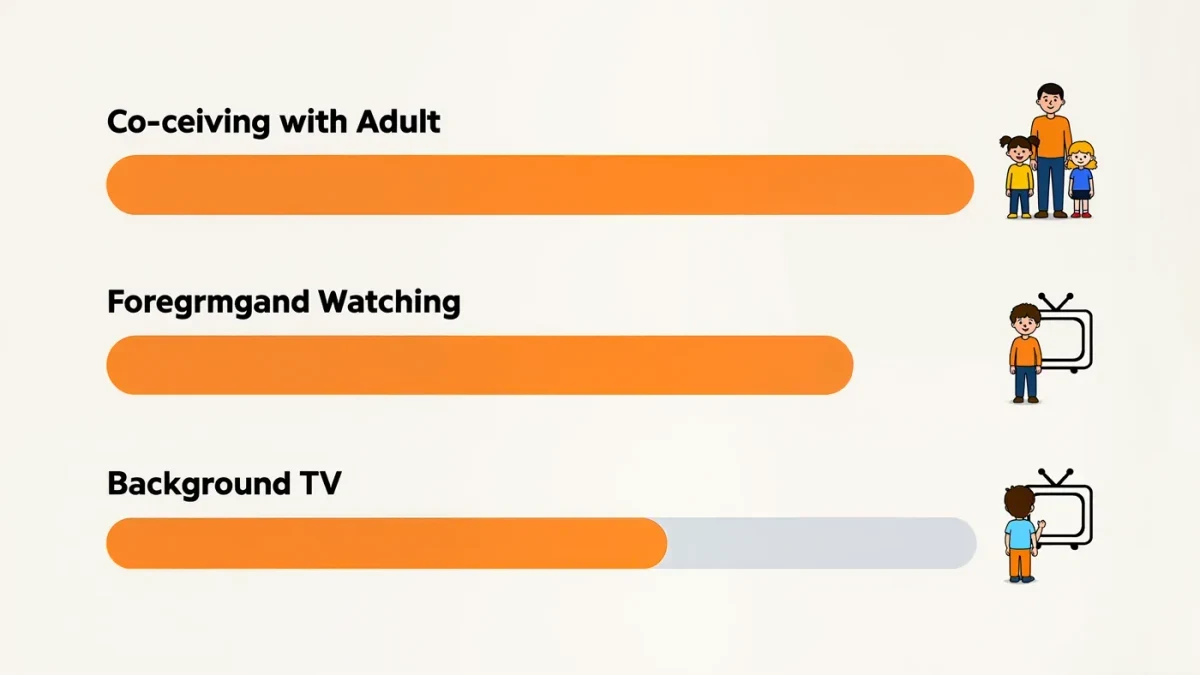
Everything. Foreground watching — child attending to a chosen program — can teach. Background TV, playing while a child plays or while adults converse, is associated in study after study with reduced play episodes, weaker parent-child language interaction, and no learning. Researchers at the University of Massachusetts studying background television found it disrupts young children's play even when they seem to ignore it. The practical upshot is counterintuitive for many households: twenty minutes of intentional watching beats two hours of ambient noise. If the TV is on for nobody, turning it off is a free win.
How much does co-viewing add?
A lot. Children's media research going back to the earliest Sesame Street studies shows children learn more from a program when an adult watches alongside, labels what's on screen, and extends it into conversation. The effect is largest for vocabulary: a word heard in a show and then used by a parent in real life is far likelier to stick. For busy families, the workable version is partial co-viewing — joining for part of an episode, asking one question, connecting one idea to the day. Perfect attendance is not required; presence is.
What do studies say about video for children under 2?
They consistently say it doesn't teach. The well-known video deficit effect: infants and toddlers learn words and actions far better from a live person than from identical video, and the American Academy of Pediatrics accordingly recommends against solo screen media under 18 to 24 months, except video chatting. Educational claims on baby videos haven't held up in controlled studies. The message isn't parental guilt; it's that the money and minutes are better spent almost anywhere else for this age group, and that video calls with relatives are a genuinely different case.
What should parents actually do with this research?
Three moves. Choose shows made with a real curriculum — public preschool programming has the deepest research bench — and check who made it. Watch together when possible, or join partway and talk about it. And keep the screen foreground or off, no ambient TV during play. Beyond that, the AAP's roughly-one-hour guideline for ages 2 to 5 is a sane anchor, not a law. Whether a given day has zero minutes or seventy is your call; the research describes tendencies, and your child is a specific person.
The short version
Good educational TV teaches preschoolers real skills; the Sesame Street literature proves the ceiling is high. Slow, repetitive, participatory design and an adult in the room raise the ceiling, while background TV and screens under 2 lower it to zero. Judge the show, watch together sometimes, and let the silence be silence. That's what five decades of research supports.