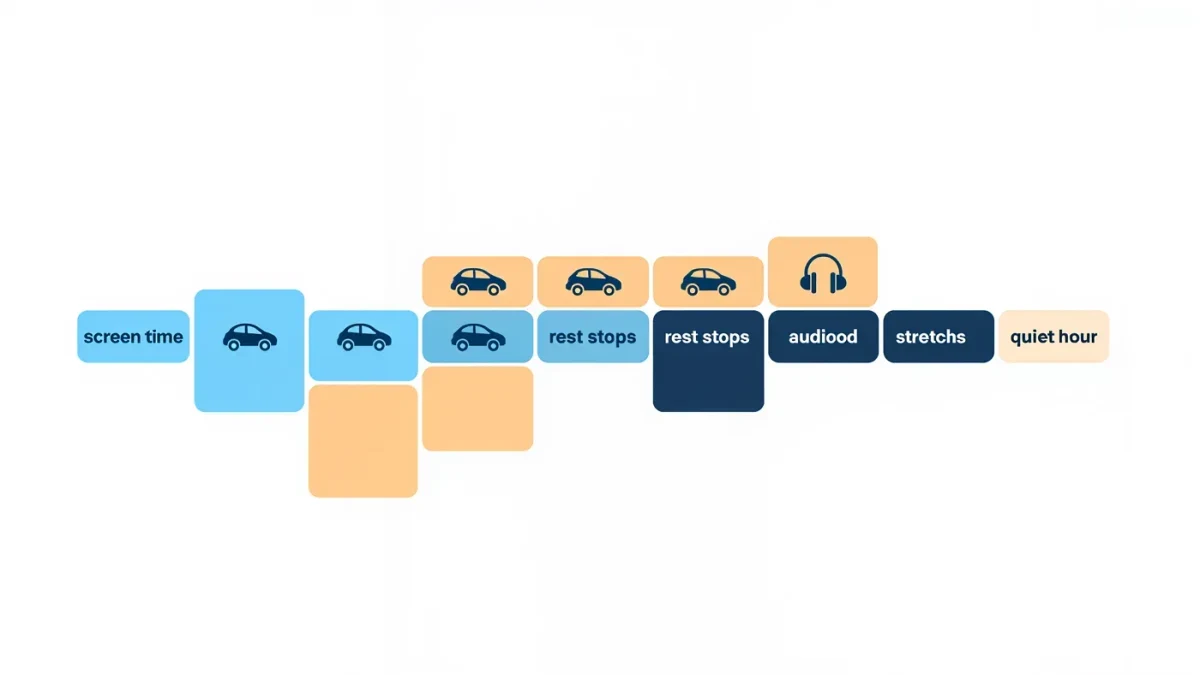
Decide the screen windows before the trip, write them into the day's shape, and save screens for when you need them most. The American Academy of Pediatrics has recommended since 2016 that families plan media use deliberately rather than improvising, and a road trip is the highest-stakes improvisation most families ever attempt. The parents who report the best trips almost all use the same structure: a shared rhythm of screen blocks, screen-free blocks, and downloaded everything, because relying on highway streaming is planning to fail.
Why does a plan beat improvisation?
Because an unplanned screen in a car becomes the default and the fight happens at hour five, at volume, at 70 miles per hour. When the rule is made on the spot, mid-whine, it is negotiated under duress and both sides know it. When the rule was set at the kitchen table two days earlier, the parent can point to it, and children, who are generally better at keeping agreements than obeying commands, respond to the difference.
Planning also fixes the adult side. A plan forces you to decide whether the driver's podcast counts, whether the front seat gets to scroll, and what happens at the lunch stop. Children audit adult phone use with precision, and a road trip where the parents scroll through the mountains while policing a tablet in the back teaches exactly what you would expect.
What does a balanced travel day look like?
Think in blocks, not minutes. A sample structure for a long driving day:
| Block | Rough share of the drive | What happens |
|---|---|---|
| Departure | First hour | Music, talking, snacks; screens stay packed away |
| Morning window | Next two hours | Screens on, freely, downloads already queued |
| Stop | Thirty to forty-five minutes | Real movement, food, a run-around game at a rest area |
| Afternoon window | Two hours | Non-screen kit: audiobook, drawing, car games |
| Last stretch | Final hour | Screens on again or a shared family audiobook, quiet by design |
Proportions vary with the child's age and the length of the drive; the fixed idea is alternation. Note the sleep caveat from research on travel and routine disruption: screens off well before any planned nap or bedtime in the car, since evening screen exposure is consistently linked to harder sleep onset, and a car full of overtired children is its own destination nobody wants.
What should you download before leaving?
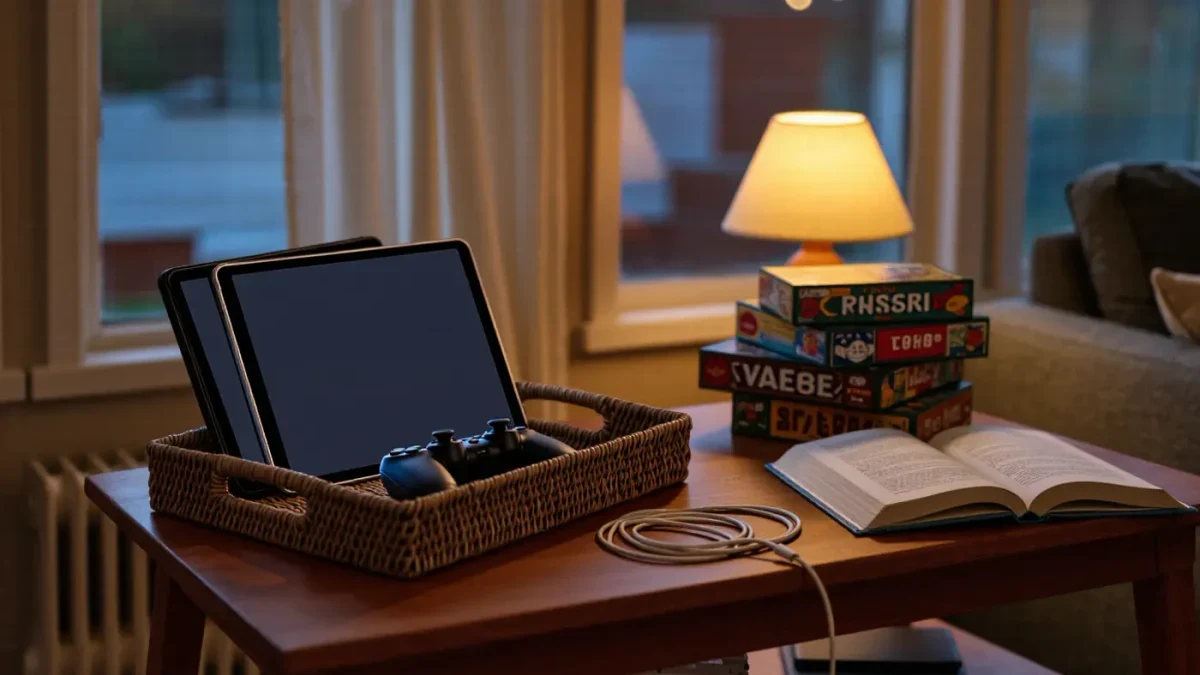
Everything you expect to play, plus double it. Downloaded episodes and movies on every service that allows it, an offline playlist, and two full audiobooks. Test one playback in the driveway. Rural routes lose signal at exactly the moment an episode buffers at 80 percent, and a mid-trip connectivity meltdown is the most preventable disaster in family travel. Pack the charging kit, a dual-port adapter, and one power bank per older child, and set a family rule that headphones come off when a parent says the driver cannot hear them, which is both safety and sanity.
Trip length changes the math more than child age does. On a single three-hour leg, one screen block and one audiobook block cover the day. On a multi-day drive, treat each day as its own budget with a fresh reserve episode, and schedule one anchor stop a day that is worth the detour, a diner, an odd roadside attraction, a swim, because the stops, not the driving blocks, are what children remember a year later.
For audiobooks, choose something that spans age groups, a story the six-year-old follows and the ten-year-old actually enjoys. Shared audio is the quiet discovery of most road-trip families: it occupies everyone at once, requires no screen, and leaves the windshield in the frame. Public libraries lend digital audiobooks for free through library apps, which most families already pay for with taxes.What belongs in a non-screen kit?
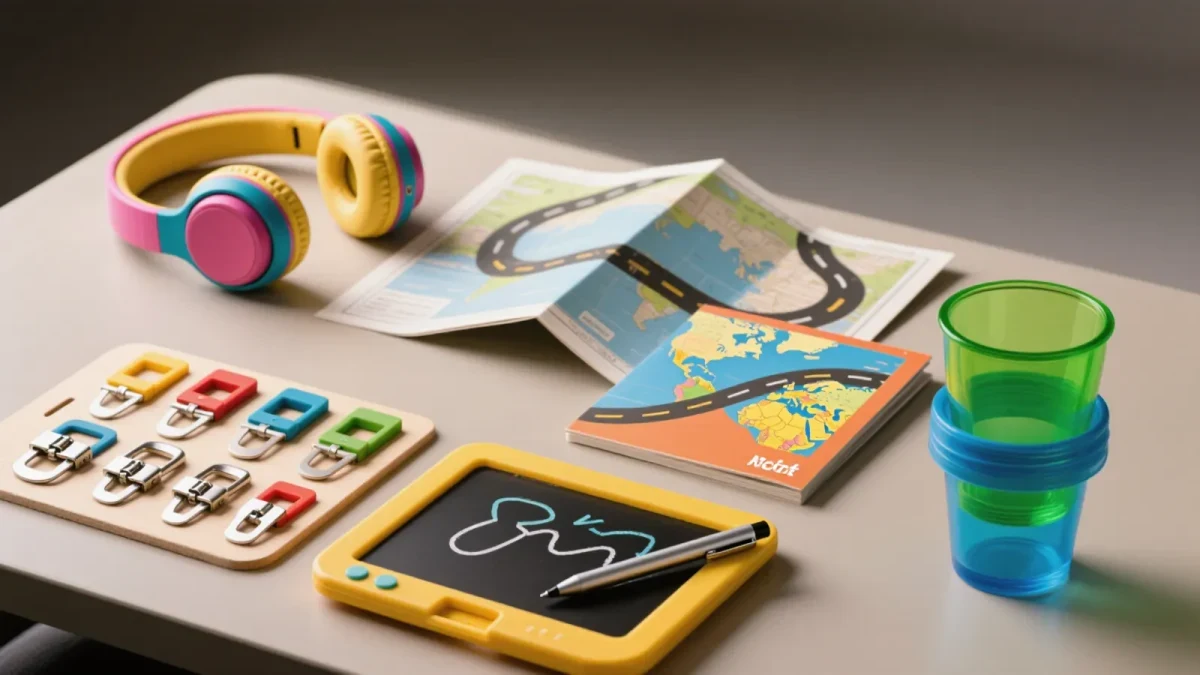
Keep it physical, novel, and cheap. The kit's job is to make the screen-free blocks feel like variety rather than deprivation. Packing basics:
- Audiobooks and playlists, the shared backbone of the drive
- Sticker books, drawing pads, and washable markers for the under-seven crowd
- Magnetic travel games and a deck of cards for seatmate play
- Classic verbal games, like twenty questions and the license plate hunt, which cost nothing and work at any age
- Novelty snacks, dispensed slowly, ideally items the child has never seen before
Novelty is the active ingredient. A toy from home competes poorly with a screen; a small new thing pulled from a bag at the right moment reliably buys twenty minutes. Wrap two or three of them if you enjoy theater.
How do you handle the inevitable begging for more?
Two moves. First, make the schedule visible and let the child track it: "screens come back after the next stop" is answerable; "later" is not. Second, hold one flexible emergency episode in reserve, announced as such, a finite resource the child can choose when to spend. This converts begging into budgeting, which is the actual skill a road trip can teach. When the reserve is spent, it is spent, and the parent's calm repetition of that fact is the whole lesson.
Also plan for the driver's limits. If traffic or fatigue makes an unplanned stop necessary, spend a screen block there without guilt; the plan serves the family, not the reverse. Adjust the evening at the hotel accordingly, an earlier lights-out instead of a late second screen block, and the next day resets clean.
What about motion sickness?
Worth planning for separately, because it changes the toolkit. Children who get carsick from reading often tolerate audio far better than screens, and looking at the horizon matters. If a child is prone, tilt their screen toward eye level, keep sessions short, and lean harder on audiobooks and verbal games. If it is severe or persistent, that is a question for your pediatrician; this article is information, not medical advice. Motion sickness aside, the formula holds: alternate the blocks, download everything, keep one episode in reserve, and let the trip's rhythm, rather than the battery meter, set the pace.