Franchise reboots, remakes, and legacy sequels rarely match the age level of the versions parents grew up with, so checking before you go matters more than nostalgia suggests. A property you remember as gentle may return with a higher rating, more realistic visuals, or darker themes aimed at the now-adult original audience. Ratings boards and content descriptors give you a reliable answer in a few minutes, and a quick review fills in what a letter rating cannot.
Why do reboots skew older than the originals?
Studios reboot familiar properties precisely because the original audience is still attached, and that audience is now twenty or thirty years older. The surest way to keep those adult fans buying tickets is to make the new version feel relevant to them: more intense action, more complicated themes, sometimes a harder rating. Live-action versions compound this, because the same events that felt abstract in animation, a chase, a fall, a villain, become concrete when rendered realistically. A parent who says the old one was fine for me at eight is comparing two different products that share a title, not a style.
Legacy sequels, which bring back old characters decades later, tend toward nostalgia-adult hybrids rather than children's films. Even animated continuations can darken in tone, since writers look for new stakes in a story that already resolved. The practical rule is simple: treat every reboot as a new film and check its rating from scratch, whatever your memory of the property says.
How do you actually check a rating?
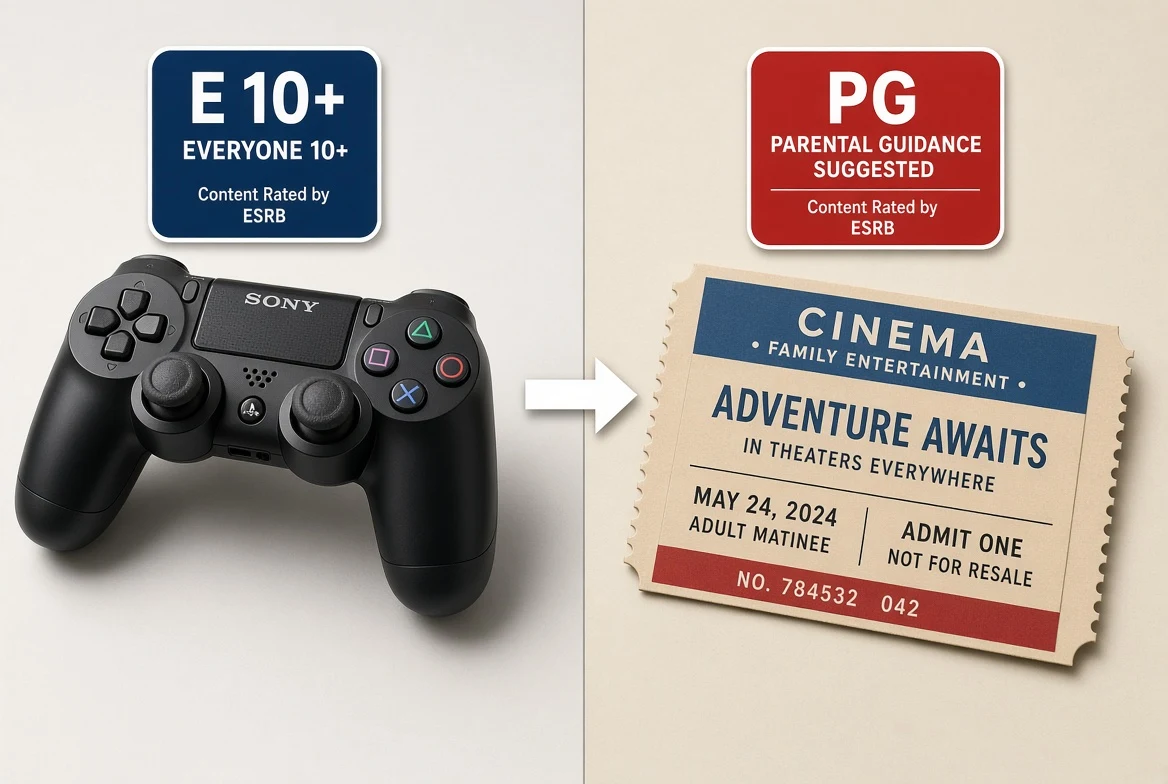
Start with the official rating and, more importantly, its content descriptors, the short phrases that explain why a film received its rating, such as action violence, thematic elements, or language. Those descriptors, not the letter, tell you whether the film's intensity matches your child. Then read one detailed review that describes specific scenes, because reviewers routinely note the scariest sequence, the saddest beat, and whether children at press screenings seemed shaken. Watching the trailer yourself, with your child's history in mind, completes the picture. The whole check takes about ten minutes.
- Look up the official rating and read the full descriptor line.
- Read one review that describes specific scenes rather than assigning a grade.
- Watch the trailer yourself before showing it to your child.
- Compare against films your child has already handled, not against your own childhood memory.
- Check parent reviews after opening weekend for real-world reports.
What if the new version is rated above your youngest?
Split strategies work better than compromise viewings. One adult takes the older child to the theater while the younger one watches a previously enjoyed film at home, and the younger child gets their own outing later. Waiting is also legitimate: most family films reach streaming within a few months, and a child who is six now may be ready at seven with no loss except the opening-weekend conversation. What rarely works is taking a borderline child and hoping, because a frightening theater experience can affect a child's willingness to try cinema at all, outlasting the film by years.
Sibling fairness is a real force here, and naming it helps. If you tell the younger child plainly that this version was made for older viewers and that their turn is coming, with a specific film attached, most children accept the boundary. What they resent is vague exclusion. The rule you can state out loud is the rule they will stop fighting.
How do you talk about the difference with kids?
A reboot is a natural media-literacy lesson sitting in plain sight. With school-age children, compare the two versions directly: what changed, who the new version seems made for, and why a studio might age up a story that used to be for everyone. Children often notice the commercial logic quickly, that the reboot is marketed to parents' memories while selling new toys to kids, and that insight is worth more than any single film. You are not ruining the movie by discussing it; you are teaching your child to read the intentions behind what they watch.
For younger children, keep the conversation concrete: the new one has scarier parts, so we are choosing something else today. The explanation fits in one sentence and needs no debate. Save the fuller comparison for ages where the comparison itself is interesting.
Do ratings mean the same thing everywhere?
No, and traveling or streaming across regions makes this obvious. The United States, the United Kingdom, and other countries run separate rating systems with different labels and thresholds, so the same film can carry different age marks in different places. Streaming services add their own maturity labels, which do not always match theatrical ratings. When you check, make sure you are reading the rating system that matches where you will watch, and when a service's label looks softer than you expected, trust the descriptor text over the icon.
Are prequels and spin-offs any safer?
Usually not, and sometimes less so. Spin-offs built around a villain or a side character often lean into that character's edge, which pulls the content older than the flagship property, and prequels frequently assume you know the ending, writing for committed adult fans. The same rule applies across every format: whatever the marketing suggests, the only reliable inputs are the rating, its descriptors, and a scene-level review. A familiar logo on the poster tells you the property's history, never the film's content.
The short version
Reboots are new products wearing familiar names, and their age level is set by studios chasing the grown-up original audience, not by your memories. Check the rating and its descriptors, read a scene-level review, and split the household if the fit is wrong for your youngest. This article is information, not professional advice; the final call on what your child sees belongs to your family.