The difference between a museum visit that fades by dinner and one a child still talks about a month later comes down to structure, not the museum itself. A 2014 analysis from the Institute for Museum and Library Services noted that children's museums consistently reported stronger learning outcomes when visits were connected to before-and-after conversations at home. That means the learning mostly happens in your living room, before and after the trip. Here's how to build those connections without turning a fun afternoon into a worksheet. This is information, not advice.
What actually sticks from a museum visit?
Novelty sticks. Researchers call it the novelty effect: children encountering a genuinely new environment pay closer attention and encode more. What fades fastest is the marathon tour. A study of school field trips to the Crystal Bridges Museum of American Art, published in 2013 by University of Arkansas researchers, found students who received a single guided tour showed measurable gains in critical thinking about art and stronger historical empathy weeks later — from roughly one hour in the gallery, not a full day. Less genuinely can be more.
Should you prepare before you go?
Yes, briefly. Ten minutes of preview the night before raises the odds your child finds something to hunt for. Look at the museum's website together, pick two or three exhibits, and let the child choose one must-see. Choice matters: when a child picks the target, attention follows. The American Alliance of Museums has long encouraged this kind of visit planning for families because it converts passive looking into a search. If your child wants the dinosaur hall for the fourth time, that repetition is learning too — familiar ground is where depth develops.
How long should the visit be?
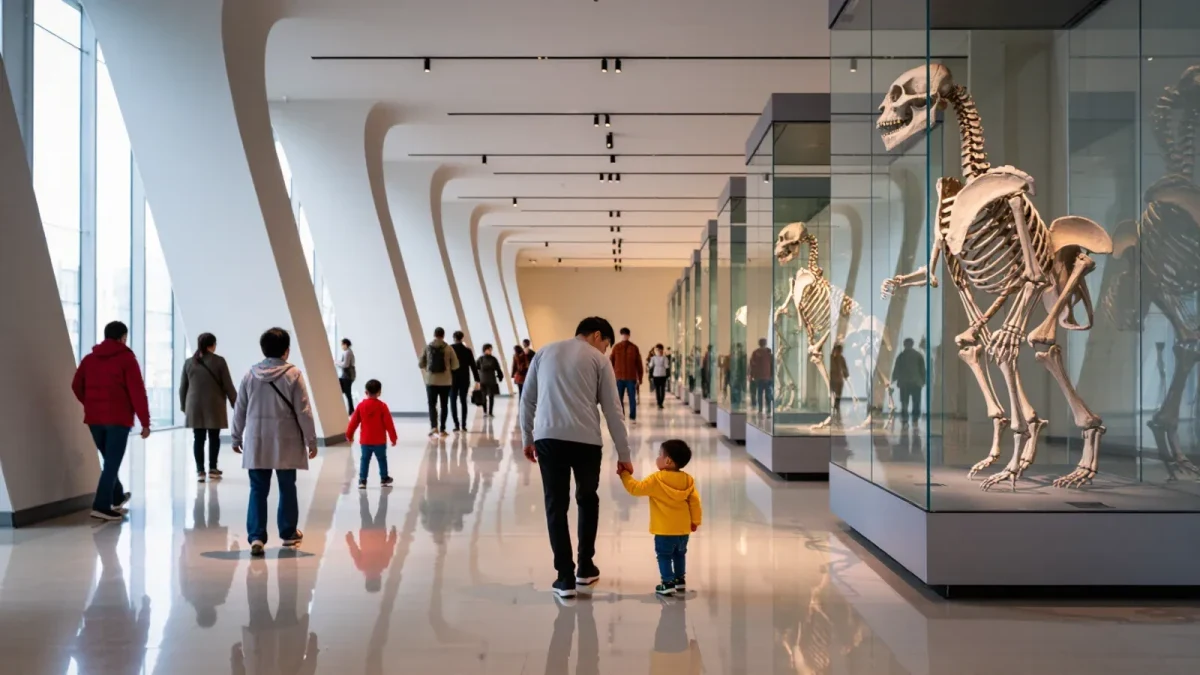
Shorter than you think. For preschoolers, plan on 45 to 60 minutes of gallery time. For early elementary kids, 90 minutes is a reasonable ceiling before attention collapses. One strong exhibit experienced fully beats six skimmed. Museums know this; that's why children's museums rotate small, focused installations rather than expecting families to cover the whole building. Build in a break, accept the gift shop as part of the ritual, and leave before the meltdown, not after. The goal is a memory of wanting to return.
What do you say in the gallery?
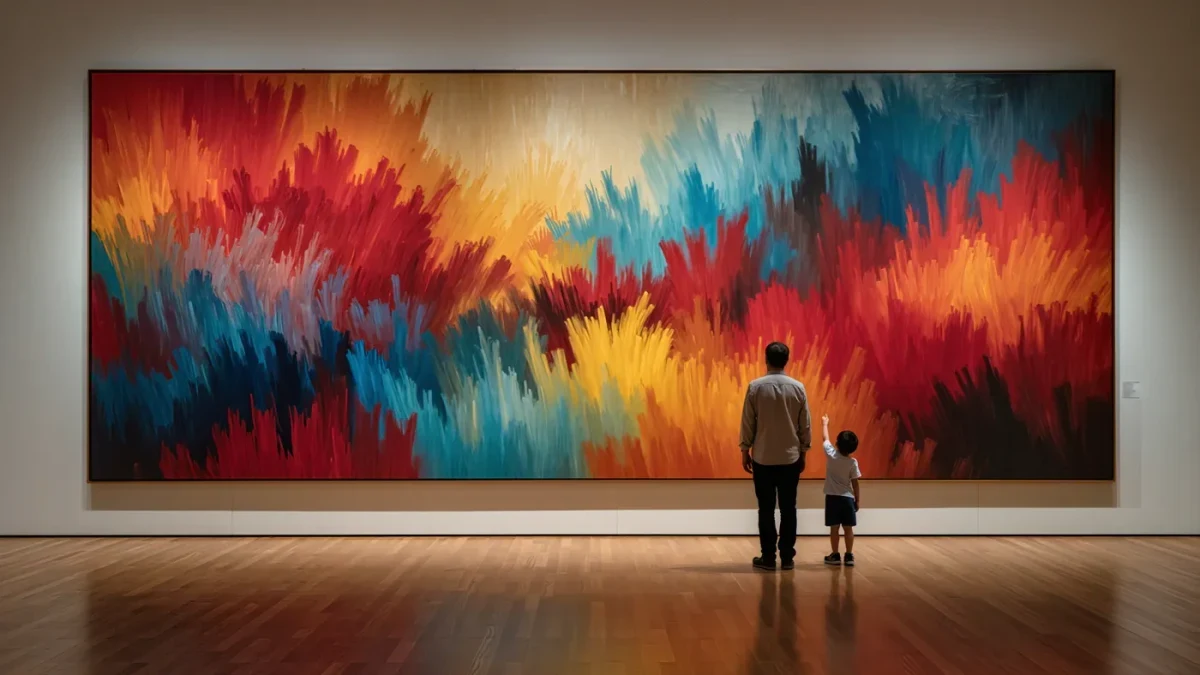
Ask questions instead of delivering facts. "What do you notice first?" and "What do you think this was used for?" invite thinking; a lecture invites nodding. Museum educators call this inquiry-based looking, and it is the core technique in docent-led school tours. A few open prompts per exhibit are plenty. If you don't know an answer, say so and look at the label together — modeling how to find information is itself the lesson. Narrate your own genuine reactions too: children calibrate interest off the adults around them.
Does the follow-up conversation really matter?
It may matter more than the visit. In the Crystal Bridges study, students who discussed the trip back in class retained the largest gains, and the researchers highlighted post-visit conversation as a likely driver. At home, the same principle applies. On the way home, ask for the highlight. At dinner, let your child be the tour guide and retell one thing to the family. A sketch of a favorite object, a library book on the topic, or a photo slideshow the child narrates all extend the experience without feeling like homework.
Which museum type fits which age?
Matching the institution to the child does most of the work for you. Here is a rough alignment based on what museums themselves design for.
| Museum type | Best fit | What it builds |
|---|---|---|
| Children's museums (hands-on) | Ages 2–7 | Cause and effect, sensory vocabulary, motor confidence |
| Natural history | Ages 4–12 | Scale, time, classification, scientific vocabulary |
| Science centers | Ages 6–14 | Experimentation, physics intuition, trial and error |
| Art museums | Ages 5+ with short visits | Observation, interpretation, perspective-taking |
| History museums | Ages 8+ | Chronology, empathy, source thinking |
What if your child races through everything?
Racing is normal, especially in a new space. Rather than fighting it, give the energy a job: a counting game, a scavenger hunt of three shapes, or the role of trip photographer. Movement plus a task often produces more observation than enforced stillness. Some children need two or three visits to the same museum before slow looking emerges — membership passes exist for exactly this reason. Whether a racing child is ready for quieter museums is your call; you know your kid's pace.
Are museum programs worth the extra cost?
Often, yes. Docent-led family tours, discovery carts, and workshop programs are designed by education staff whose entire job is making collections accessible to children. Many are included with admission, and museums receiving federal support through the Institute for Museum and Library Services frequently offer free or reduced family programming — check before assuming the price. A program also gives your visit a natural structure and endpoint, which solves the pacing problem for you.
The short version
Pick one target, keep it short, ask more than you tell, and talk about it afterward. The museum supplies the novelty; you supply the repetition. Children who visit museums regularly tend to see them as places they belong, and that sense of belonging is what keeps them walking in as teenagers and adults. One good hour, repeated a few times a year, beats the annual all-day marathon every time.