More teens now get at least some news from podcasts — not by seeking journalism, but by following hosts they already trust through comedy, gaming, or interview shows, then absorbing current events along the way. The shift matters because podcast news is long, conversational, and personality-driven, which makes it engaging and, at the same time, free of most of the rules that govern traditional news. Here is what that means for families. This is information, not media-literacy instruction.
How common is teen podcast news listening?
Direction is clearer than the decimal. Surveys of teen media habits — including recurring work from research groups such as Pew Research Center and Common Sense Media on where teens encounter news — have documented a steady migration toward on-demand audio and video, with many teens reporting they get news from personalities and influencers rather than news organizations. Specific percentages vary by study and year, which is worth remembering when a headline quotes one number as settled fact.
Why podcasts appeal to teens for news
Three reasons come up consistently. Control: episodes wait for you, pause for you, and never interrupt with a push notification mid-game. Tone: hosts talk like people rather than anchors, which reads as honesty to a generation fluent in detecting broadcast formality. And parasocial trust: a host a teen has listened to for hundreds of hours feels known, so their take on an event carries borrowed credibility. None of this is bad; all of it deserves a name in conversation.
What is different about news in podcast form?
Structure, mostly. A news broadcast separates reporting from opinion by format; a podcast often blends them in one flowing monologue, with corrections rare and ad breaks inside the argument. Episodes run hours long, which encourages depth but also lets a confident claim go unchallenged for a long stretch. There is no equal-time rule, no editor, and rarely a visible distinction between an interview, an ad, and a rant. Teens are not wrong to prefer the format; they are simply navigating it without the labels earlier generations took for granted.
Questions that build podcast media literacy
- Who is this host, and what did they do before this show?
- Was that a reported fact, the host's opinion, or a paid promotion?
- Has the show ever issued a correction — can you find one?
- What would a different outlet's version of this story include?
Video podcasts changed the habit
The fastest-growing corner of the format is not audio at all. Video podcasts — full episodes clipped into short vertical segments — meet teens where short-form algorithms already deliver everything else, and the clip often serves as a trailer that pulls listeners into two-hour episodes. For news habits, that means a teen's first encounter with a current event may be a ninety-second clip of a comedian's monologue. The full episode usually has more context; the clip rarely does. Knowing which one your teen saw is the difference between two very different conversations.
The parasocial problem, stated fairly
Trust in a host is not a defect of podcast listening — it is the product. Hundreds of hours in someone's voice builds the same familiarity once reserved for a favorite teacher, and that familiarity does useful work: it keeps teens engaged with topics they would scroll past in print. The fair concern is that the trust transfers. A host's take on a war, an election, or a medical claim carries authority the host has not earned on that subject. Naming the transfer out loud — "you trust him on gaming, and he knows gaming; what's his war reporting based on?" — is a single sentence that does most of the work.
Where teens' numbers actually sit
Headline statistics about teen news habits deserve their own media-literacy check. Surveys define "news" differently, sample different age bands, and land years apart, so one study's number cannot be subtracted from another's to prove a trend. What recurs across the research is direction rather than precision: away from scheduled broadcasts, toward on-demand formats, and toward personalities over institutions. Direction is enough to act on.
What can parents do?
Listen first, then talk. Asking your teen to play you a segment from a show they follow does double duty: you learn what is actually shaping their view of events, and they practice articulating why they trust the source. Media-literacy educators recommend the same habit for podcasts that works for video — occasionally checking a claim against a wire service or a second outlet, together, out loud. Two minutes of comparison teaches more than any lecture about bias, and it positions you as a co-investigator rather than a censor. What your teen listens to remains your family's call within whatever device rules you set.
Is podcast news bad for teens?
Not inherently — in some ways it beats the alternative. An hour-long interview with a newsmaker contains more substance than a hundred headline notifications, and podcast listeners often absorb context that feeds and cable both strip out. The risks sit elsewhere: single-source habits, opinion absorbed as fact, and shows built on outrage that reward the listener for feeling informed rather than becoming so. The remedy for all three is the same — more sources, occasionally compared — and it is cheap.
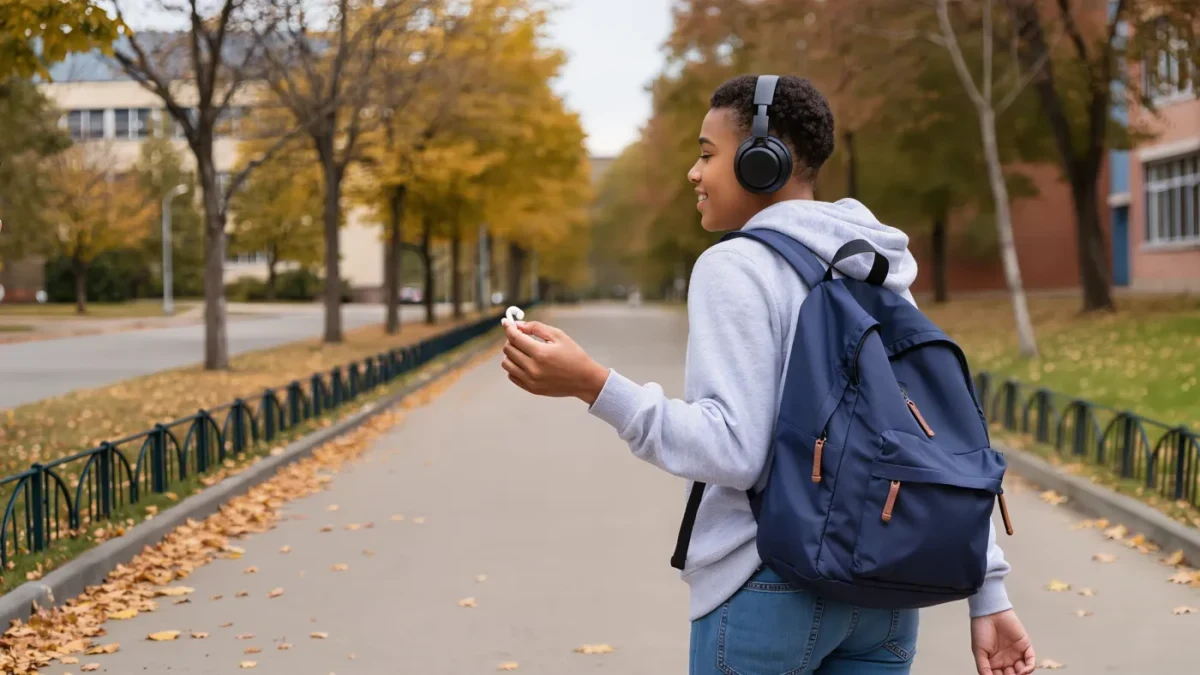
Audio will keep claiming a bigger share of teen attention because it fits into commutes, chores, and games where video cannot go. Families who treat that as an opening rather than a threat get something rare: a media habit they can share with a teenager, one earbud each.