Your public library almost certainly offers more free children's programming than you know, and using it costs nothing but the asking. The Institute of Museum and Library Services, the federal agency that funds library services, reported that U.S. public libraries hold hundreds of millions of children's programs and materials circulations annually — programming on a scale most parents underestimate. Storytime is the visible tip. Below it sit STEM kits, tutoring, summer reading, and museum passes. This is information, not advice.
Why do libraries offer so much for free?
Because that is the mission, and increasingly the business model of the public library. As books moved online, libraries shifted toward being community learning centers — a transition library scientists have documented for two decades. Public funding pays for programs regardless of how many families show up, which means an underused STEM kit or a lightly attended tutoring hour is pure surplus for whoever walks in. The IMLS, which channels federal money to state library systems, treats children's services as a core measure of library health, so programming for kids tends to be the best-funded part of the building.
What kinds of programs are typical?
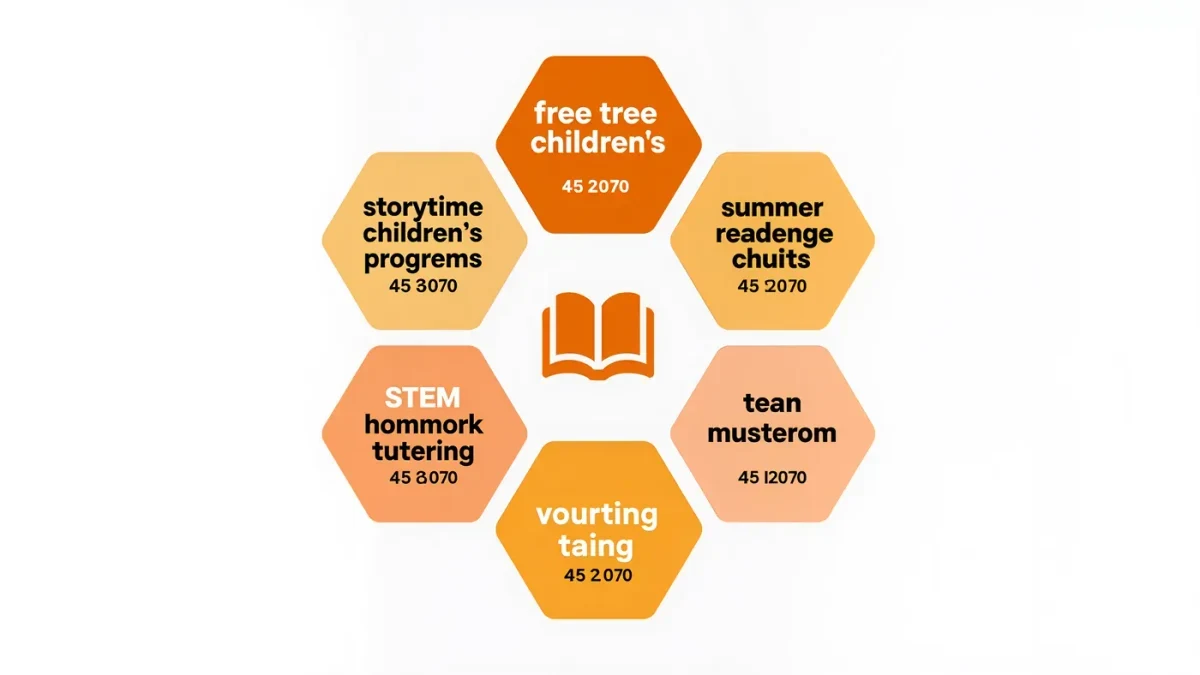
Across systems, the standard menu for children looks roughly like this.
| Program | Typical ages | What it builds |
|---|---|---|
| Storytime (baby to preschool) | 0–5 | Early literacy, phonological awareness, group routines |
| Summer reading challenge | 4–14 | Reading volume, avoidance of summer learning loss |
| STEM kits and maker hours | 6–14 | Experimentation, coding, building |
| Homework help and tutoring | 6–18 | Assignment completion, study habits |
| Museum and attraction passes | Whole family | Access to local institutions |
| Teen advisory and volunteer hours | 12–18 | Leadership, service credit |
Exact offerings vary by system, but nearly every U.S. public library runs versions of the first three, and larger systems add language conversation groups, author visits, and even instrument lending.
What does summer reading actually do?
It addresses a documented problem: summer learning loss. Reading research consistently shows children who stop reading over summer break lose ground, particularly in lower-income households, and structured summer programs blunt that slide. Library summer reading programs add the two ingredients that make summer reading stick — choice and low-stakes rewards — which motivation research strongly favors over assigned lists. A child who reads eight self-chosen graphic novels over July has done more for September than one who slogs through two assigned classics. Most programs also include free meals in partnership with local districts at some branches.
What about the librarians themselves?
Youth librarians are an underused resource in their own right. They hold graduate-level training in children's literature and development, and "ask the librarian for a book like the one my kid just finished" is a service they provide happily and expertly — a reader's-advisory role that no algorithm matches for a reluctant reader. They can also guide you to the right database for a school project, since libraries subscribe to reference services that cost families nothing through a library card. The reference desk is the last place in town where expert help is free without an appointment.
How do you find out what your library offers?
Three moves cover it. First, check the events calendar on your library system's website and filter by children's — most systems list programs a month or more ahead. Second, get every family member a card; children's cards in many systems carry no late fines now. Third, ask at the children's desk what's underused — librarians will tell you which programs have open seats, and that's where the value is. Whether your family uses the library weekly or monthly is your call; the threshold for trying is a single visit.
Are library programs good for screen-wary families?
They are one of the few free environments built around shared physical presence with other families — a genuine third place for children. Programs run on a schedule, require showing up, and mix ages and neighborhoods in a way few other public settings do. For homeschooling families, libraries frequently serve as a core social and curriculum backbone, with many systems now offering dedicated homeschool resource guides and daytime programming. The building does the gathering; you just have to arrive.
The short version
Beyond books, your library likely lends STEM kits and passes, runs storytime and summer reading, hosts free tutoring, and employs professionals trained to match your child with the right book. It's publicly funded, already paid for, and underused. One calendar check and one conversation at the children's desk will surface more free programming than most families use in a year.