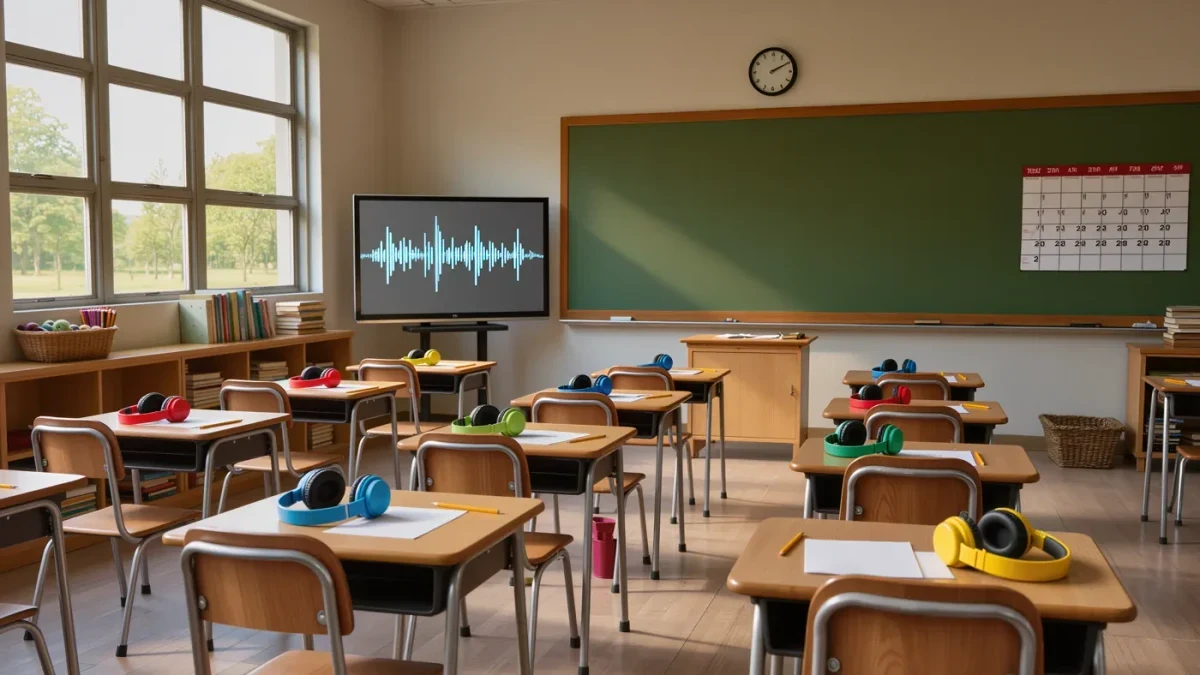
Teachers are folding kids' podcasts into ordinary classroom moments — morning warm-ups, quiet work time, the ten minutes after lunch — and finding that audio strengthens listening stamina in a way screens don't. Federal data from the National Center for Education Statistics shows most U.S. classrooms now have one-to-one devices, which quietly solved the distribution problem: every child has a speaker in their desk. What teachers do with that speaker is the interesting part. This is information, not advice.
Why audio, when video is right there?
Audio leaves the visual channel free for the child's own imagination, and that matters for comprehension. When a podcast describes a tidal pool or the signing of a treaty, the listener has to build the picture — an effort researchers link to stronger mental imagery and vocabulary retention. Audio also removes the visual overstimulation many teachers are managing. The listening itself is the skill: following a spoken argument for ten minutes without pausing or scrubbing is something many children now rarely practice.
When during the day do podcasts fit?
The teachers who stick with audio tend to use it in fixed slots rather than as a treat. Common placements look like this.
| Slot | Typical use | Episode length |
|---|---|---|
| Morning arrival | Settling routine while attendance runs | 5–10 min |
| Transitions | Calm reset after recess or PE | 5–15 min |
| Independent work | Quiet background for drawing or journaling | 15–25 min |
| Whole-class lesson | Listened together, then discussed | 10–20 min |
| ELL support | Repeated listens at accessible pace | Any |
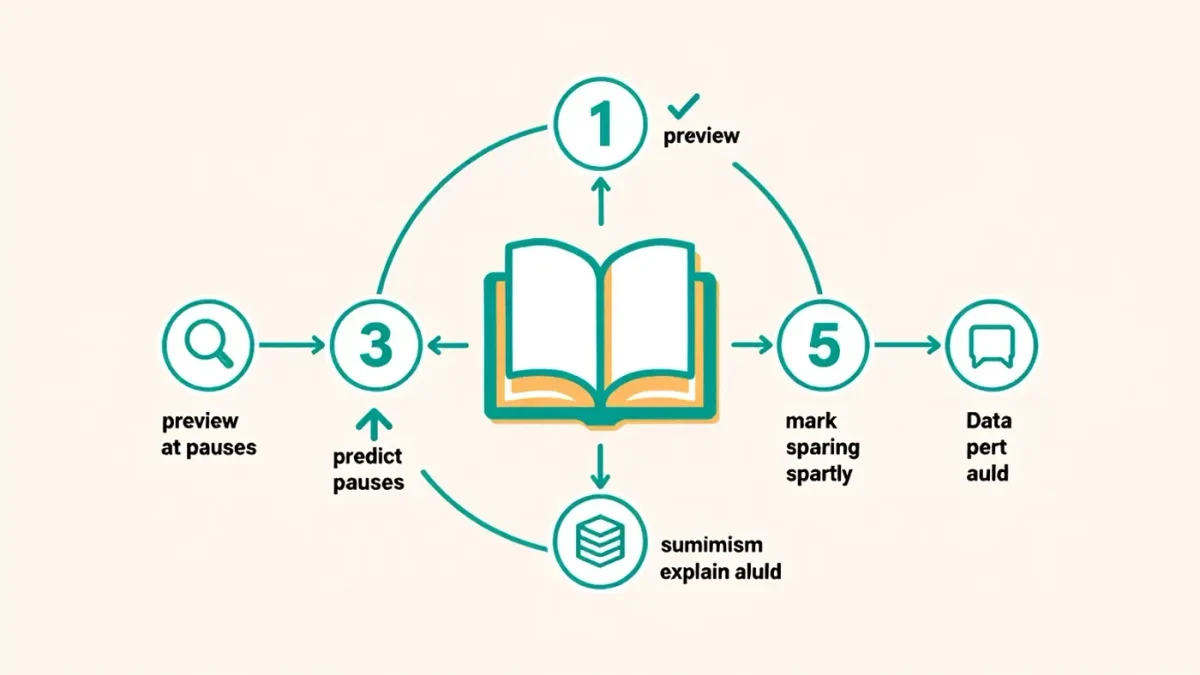
The whole-class slot is where the teaching is most deliberate: pause points, a question on the board, a quick write or draw response after the episode.
What do students actually gain?
Teachers and researchers point to three gains. Listening comprehension — the ability to follow spoken language — is a documented predictor of later reading comprehension, and audio gives it direct practice. Vocabulary: well-made kids' podcasts use richer words than conversational speech, delivered with intonation that carries meaning. And background knowledge: a ten-minute episode on deep-sea vents or the Erie Canal builds the schema that makes later reading easier. The gains are modest per episode; the compounding across a school year is the point.
Which formats work best in class?
Short beats long, and serialized beats scattered. Episodes under 20 minutes fit a lesson block without truncation. Narrative series — where the same characters return — build loyalty that keeps students asking for the next episode, which is engagement teachers don't have to manufacture. Question-and-answer shows work well as writing prompts: students submit questions, which turns listening into a production. Some classes go further and make their own podcast, a project that folds research, writing, revision, and public speaking into one unit — the kind of integrated work education researchers consistently praise.
What are the honest limitations?
Audio is not self-differentiating. A child reading two years below level may still follow a podcast happily, but a child with an auditory processing difficulty may struggle more with audio than text. Attention wanders invisibly in listening — no page to lose your place on — so teachers check for it with brief response tasks rather than assuming. And quality varies widely; an episode with poor pacing or heavy sound design can lose a class in ninety seconds. Previewing, the way teachers preview any classroom material, remains the rule.
Can parents use any of this at home?
Yes, and the classroom habits translate directly. Fixed slots work — car rides, drawing time, pre-dinner wind-down. Listening along lets you borrow the teacher's best move: one question after the episode, not a quiz. And letting a child re-listen to a favorite episode is not indulgence; repeated exposure is how vocabulary sticks. Whether podcasts earn a slot in your family routine is your call, but the price of finding out is low — the widely used kids' shows are free.
The short version
Podcasts entered classrooms through the device in every desk and stayed because they build listening stamina, vocabulary, and background knowledge during minutes that were previously dead air. Teachers slot them into transitions and pair them with a single question. The same recipe works at a kitchen table or in a school run.