The right board game can add real reading practice to a child's week without a single worksheet. A 2016 study in the journal Early Childhood Research Quarterly found that playing linear number board games improved young children's number skills — and reading researchers point the same direction for word games, where letter tiles, card text, and rulebooks create what literacy teachers call authentic reading purpose. Children read because the game makes them want to. Here's how to pick games that carry that hidden payload. This is information, not advice.
How do board games build reading skills?
Three mechanisms do the work. First, environmental print: cards, tiles, and boards give beginners repeated exposure to letters and words in a low-stakes setting. Second, motivation: a child who wants to know what a card says will wrestle with text they'd resist in a book. Third, vocabulary in context: words like "quarrel," "harvest," or "voyage" appear attached to a picture and an action, which is exactly how vocabulary researchers say new words stick best. The game is a delivery system for repeated, meaningful encounters with text.
What should you look for on the box?
Three features predict whether a game will exercise reading rather than bypass it.
- Text on cards that matters mechanically — if knowing the words changes your move, the child has a reason to read.
- Cooperative or low-pressure play, so weaker readers aren't punished for slow decoding.
- A theme your child already loves, because prior knowledge carries comprehension.
Avoid games where all information is in icons, however elegant — they play fast but teach almost no reading.
Which games work at which age?
Rather than endorsing specific titles, here's a map by reading demand, so you can match what's on your shelf or in the store.
| Age | Game type | Reading skill exercised |
|---|---|---|
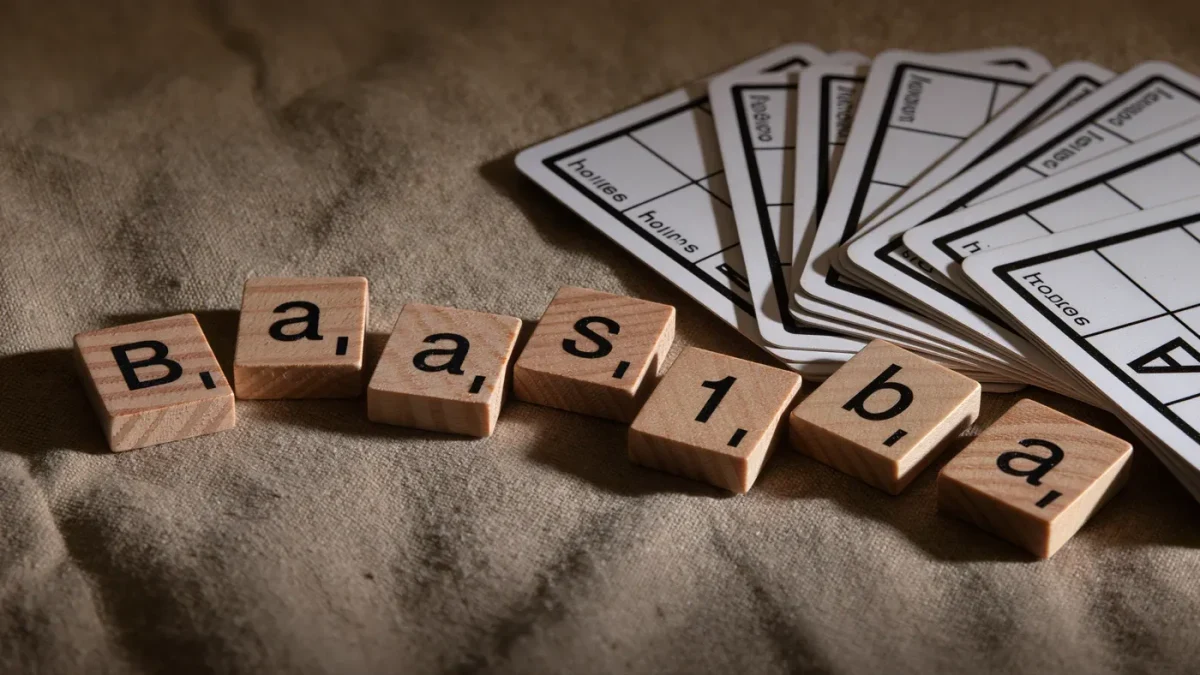
| 4–6 | Letter-tile word games, matching games with printed words | Letter recognition, blending, sight words |
| 6–8 | Card games with short ability text, simple adventure games | Fluent decoding, following written instructions |
| 8–10 | Word-building scoring games, clue and deduction games | Spelling, vocabulary breadth, inference |
| 10+ | Strategy games with rulebooks, story-driven campaign games | Complex syntax, domain vocabulary, summarizing |
The rulebook itself is a reading assignment children volunteer for. Letting an older child own the rules — reading aloud, checking, arbitrating disputes — is one of the highest-value reading jobs in family life.
How much does this actually matter?
Be honest about scale: a weekly game night is a supplement, not a curriculum. The strongest documented game-learning effects, like the 2016 number-game findings, come from short, repeated sessions. For reading, the honest claim is that word games provide high-volume, low-anxiety exposure to text and new vocabulary, and that motivation is the binding constraint in literacy — games are unusually good at motivation. Nothing about a board game replaces daily reading practice with actual books. What it does is add an hour a week where reading is the price of fun, and kids pay it gladly.
How do you keep a struggling reader in the game?
Cooperative games are the answer many families land on. When everyone plays against the board, there's no cost to reading slowly, and stronger readers naturally help without it being charity. Two house rules help too: allow a read-aloud assist at any time, and treat a misread card as re-readable rather than a forfeited turn. The goal is thousands of low-stress encounters with print, and a child who feels humiliated at the table stops volunteering for them. Whether competition works in your family is your call.
Can word games help a second language learner?
Yes, often faster than for native speakers, because every card is a mini vocabulary lesson with a visual anchor. Language researchers call this comprehensible input — new words delivered with context that makes meaning guessable. For a child building English vocabulary, a themed game about animals or cooking delivers a cluster of related words in one sitting, and the repetition across turns is spaced practice without anyone planning it. Shorter, word-light games beat heavy text games for beginners.
The short version
Choose games where reading changes what happens, favor cooperation over elimination, and hand the rulebook to your strongest reader or your most motivated one. Played weekly, word-heavy board games quietly add an hour of purposeful reading to a child's life — the kind that never feels like a chore, which is precisely why it works.